Warning This information was last updated more than 166 days ago, so some details may have changed.
A newer option appeared in February 2025
An update noted on 2025-02-19 mentioned that the Ministry of Industry and Information Technology introduced a new service category called "shared walkie-talkies". For the kind of everyday short-range communication discussed here, that service may be a better fit once compatible devices become available on the market.
The real problem is uncontrolled interference
The core complaint is simple: a lot of people buy handheld radios, turn them on, and start using whatever frequencies happen to be in the device. Often the buyer does not understand the rules, and sometimes the seller does not either.
That leads to a mess. Some sets end up transmitting in the 430–440 MHz amateur band. Others stray into 450–470 MHz railway coordination frequencies. At that point it is no longer just sloppy use — it becomes interference with services that should not be disturbed.
So if someone wants a frequency range that is at least intended for open public walkie-talkie use, the relevant band is the 409 MHz public walkie-talkie segment.
The public walkie-talkie channels
The designated frequencies for public walkie-talkies are 409.7500 MHz to 409.9875 MHz, spaced at 12.5 kHz intervals, for a total of 20 channels.
These are the channels:
<table> <thead> <tr> <th>Channel</th> <th>Frequency (MHz)</th> </tr> </thead> <tbody> <tr> <td>1</td> <td>409.7500</td> </tr> <tr> <td>2</td> <td>409.7625</td> </tr> <tr> <td>3</td> <td>409.7750</td> </tr> <tr> <td>4</td> <td>409.7875</td> </tr> <tr> <td>5</td> <td>409.8000</td> </tr> <tr> <td>6</td> <td>409.8125</td> </tr> <tr> <td>7</td> <td>409.8250</td> </tr> <tr> <td>8</td> <td>409.8375</td> </tr> <tr> <td>9</td> <td>409.8500</td> </tr> <tr> <td>10</td> <td>409.8625</td> </tr> <tr> <td>11</td> <td>409.8750</td> </tr> <tr> <td>12</td> <td>409.8875</td> </tr> <tr> <td>13</td> <td>409.9000</td> </tr> <tr> <td>14</td> <td>409.9125</td> </tr> <tr> <td>15</td> <td>409.9250</td> </tr> <tr> <td>16</td> <td>409.9375</td> </tr> <tr> <td>17</td> <td>409.9500</td> </tr> <tr> <td>18</td> <td>409.9625</td> </tr> <tr> <td>19</td> <td>409.9750</td> </tr> <tr> <td>20</td> <td>409.9875</td> </tr> </tbody> </table>For approved public walkie-talkies, the relevant operating characteristics are:
- Narrowband operation: 12.5 kHz
- Maximum power: 0.5 W
- Antenna: users may not replace it themselves
CTCSS/DCS tones can be used to reduce nuisance listening from other users on the same channel, but they do not provide privacy or secrecy. They only help a radio ignore unwanted signals unless the matching tone is present.
What “legal public walkie-talkie” really means
A properly compliant public walkie-talkie is not just any programmable radio set to one of those frequencies. The rules described here are tied to approved equipment, limited to 0.5 W, with a non-user-replaceable antenna.
That distinction matters. Ordinary handheld radios, modified units, or vehicle-mounted transceivers are not automatically equivalent to legal public walkie-talkies just because they can tune to 409 MHz.
About vehicle radios and 409 MHz
There is also a practical hardware issue. Many common 430 MHz mobile antennas sold for vehicle radios are not well suited to 409 MHz. Because mobile radios usually run higher power, using an antenna that is poorly matched to 409 MHz can produce high SWR, and that can damage the radio.
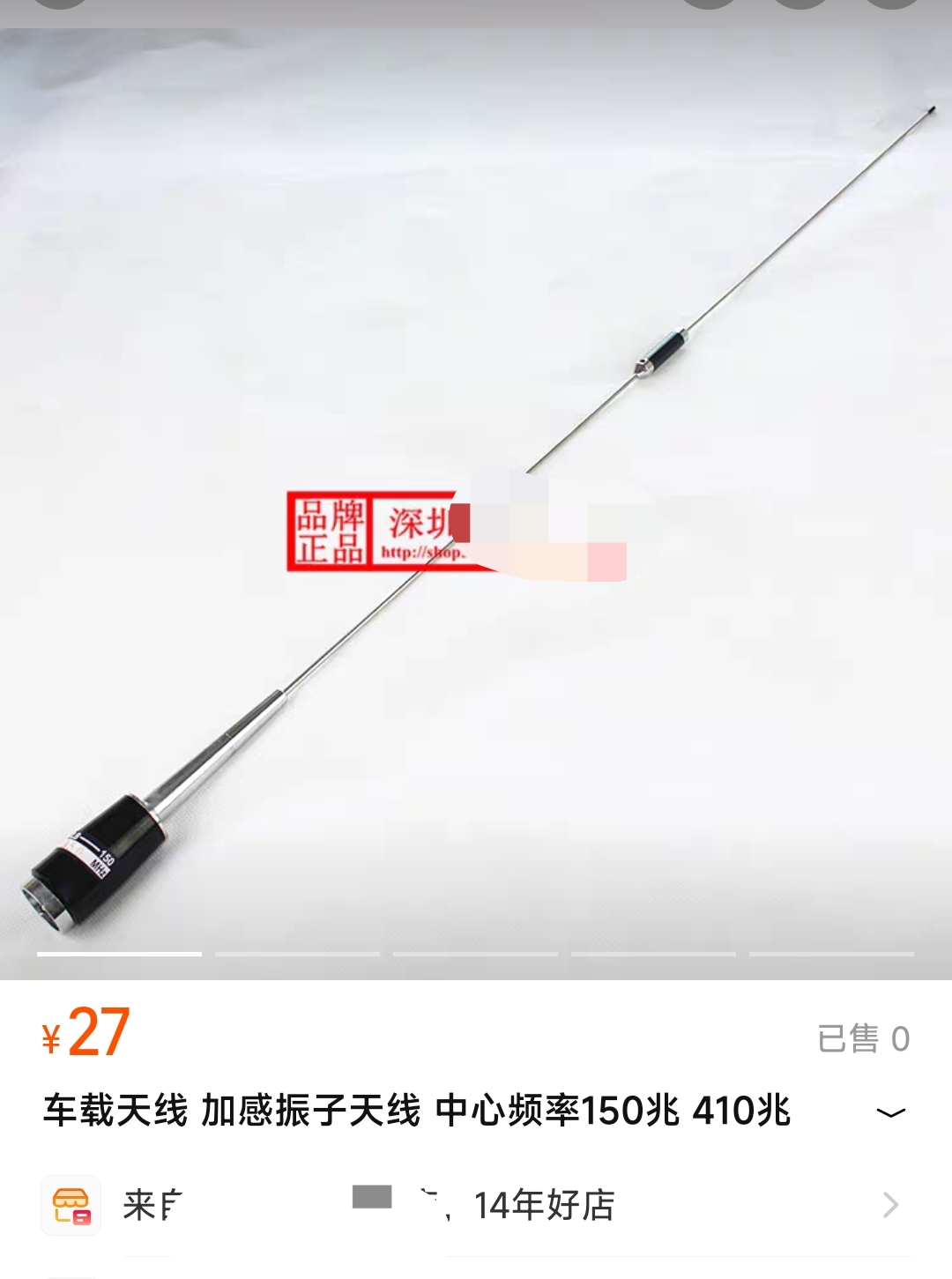
So even from a purely technical standpoint, frequency coverage, antenna matching, and power handling are not things to ignore.
Will channel overlap happen?
In theory, yes. There are only 20 channels, so shared use is inevitable.
That is why sub-audible tones are often recommended in practice: they let multiple groups share a channel with fewer annoyances. But the limitation should be stated clearly: tones do not stop others from receiving your transmission. They only affect what a radio chooses to open its speaker for.
Why this matters
The strongest point in the original discussion is not really about convenience. It is about keeping untrained users away from frequencies they should never be occupying.
If people insist on using radios casually, the worst outcome is not that they have imperfect audio or occasional channel collisions. The worst outcome is interference with amateur users, business systems, or railway-related communications.
A note on availability and price
One complaint raised is that truly compliant public walkie-talkies have been rare on the market and often surprisingly expensive, which helps explain why so many people end up with general-purpose radios instead.
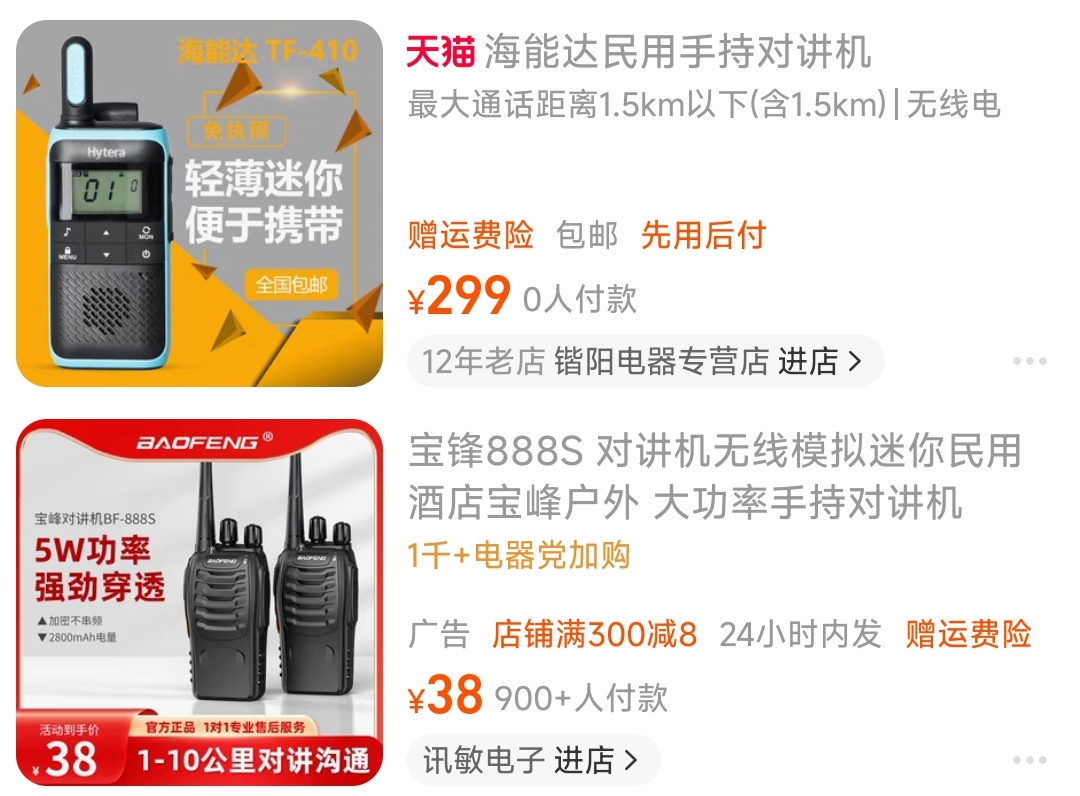
That does not change the underlying rule set, but it does explain part of the market confusion.
Bottom line
If the goal is legitimate public-band use, the 409 MHz public walkie-talkie channels are the designated frequencies, and the compliant device profile is clear: approved equipment, 0.5 W maximum, narrowband operation, and no user-swappable antenna.
And if the use case is still developing, the newer shared walkie-talkie category may be worth watching.