Why I Wanted to Try It
AI has been getting a lot of attention lately, and since I already trade stocks myself, I wanted to see what it could actually do in that context. AI-driven stock analysis is not a brand-new idea, but after a few years of rapid development, it felt like a good time to test whether these tools had become more practical.
Setting It Up
I picked an open-source project on GitHub called AlphaBot and used it as a starting point.
Deployment
First, clone the repository:
git clone https://github.com/x-pai/alphabot.git
cd alphabot
Then run the deployment script:
./deploy.sh
The script automatically builds the Docker image and starts the deployment. The main configuration file is backend/.env, where you need to fill in the URL and token for the large language model service.
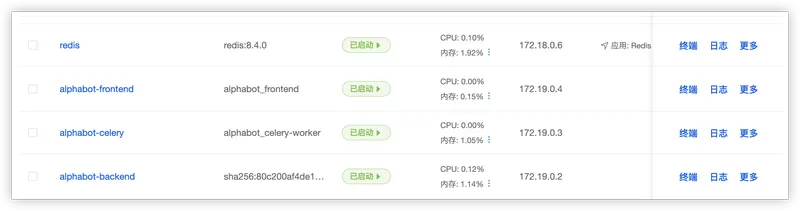
In a typical setup, there are usually four Docker containers running. I already had Redis available, so I did not need to share the bundled Redis instance.
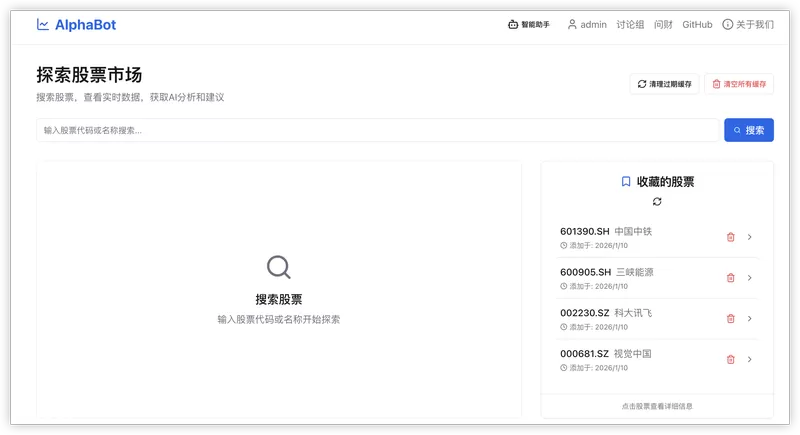
Once it is up and running, you can search for stocks, save them to a watchlist, and start running analysis.
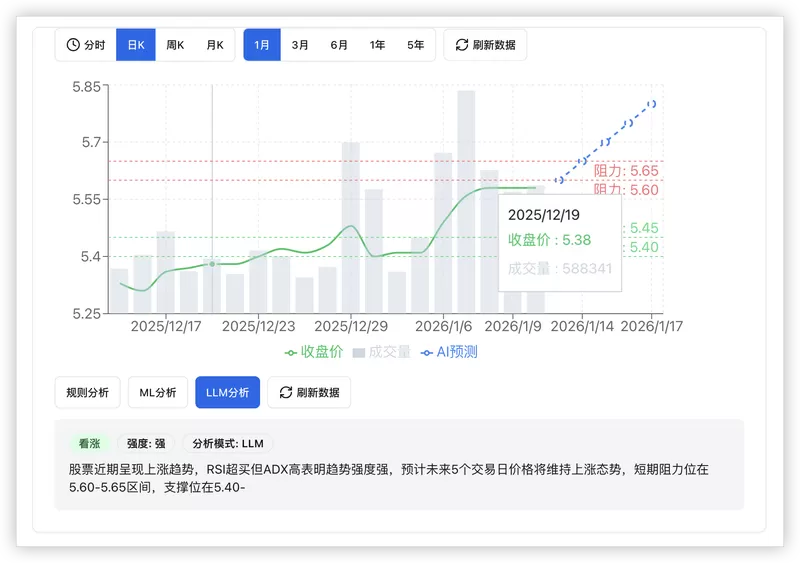
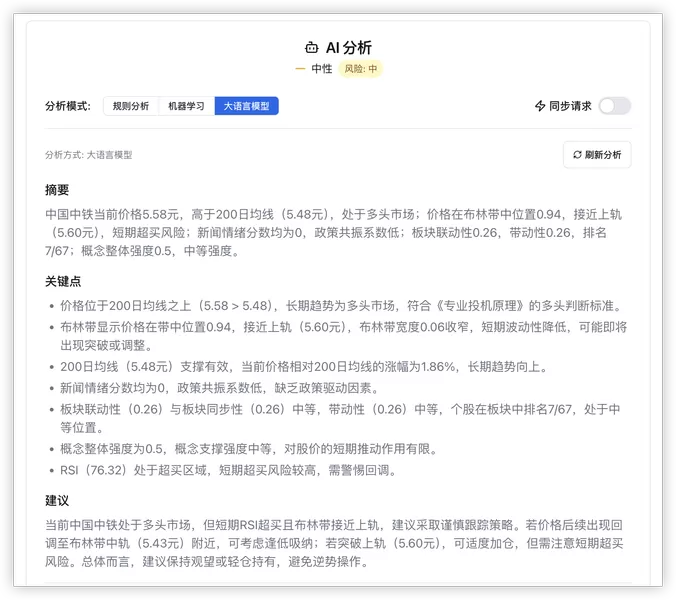
What This Can Do Right Now
This is still only a very basic first step. Actually getting to the point of "AI trading stocks" in any meaningful sense requires much more than simply deploying a project and asking it for analysis. For now, I am treating it as an experiment: let the AI analyze stocks, observe how useful the output is over time, and use the results only as reference rather than as a direct trading signal.
What I Want to Try Next
The next idea is to let AI handle analysis and market monitoring continuously. If it identifies a stock and timing that look promising, it could send me a notification. After that, I would still make the final call myself on whether to buy or sell.