I once thought this whole saga of wrestling with the campus network was close to an ending. After thinking about it again, that was probably too optimistic. There may still be a long way to go.
For one thing, the dorm’s unofficial backup network has now entered the 5G era.
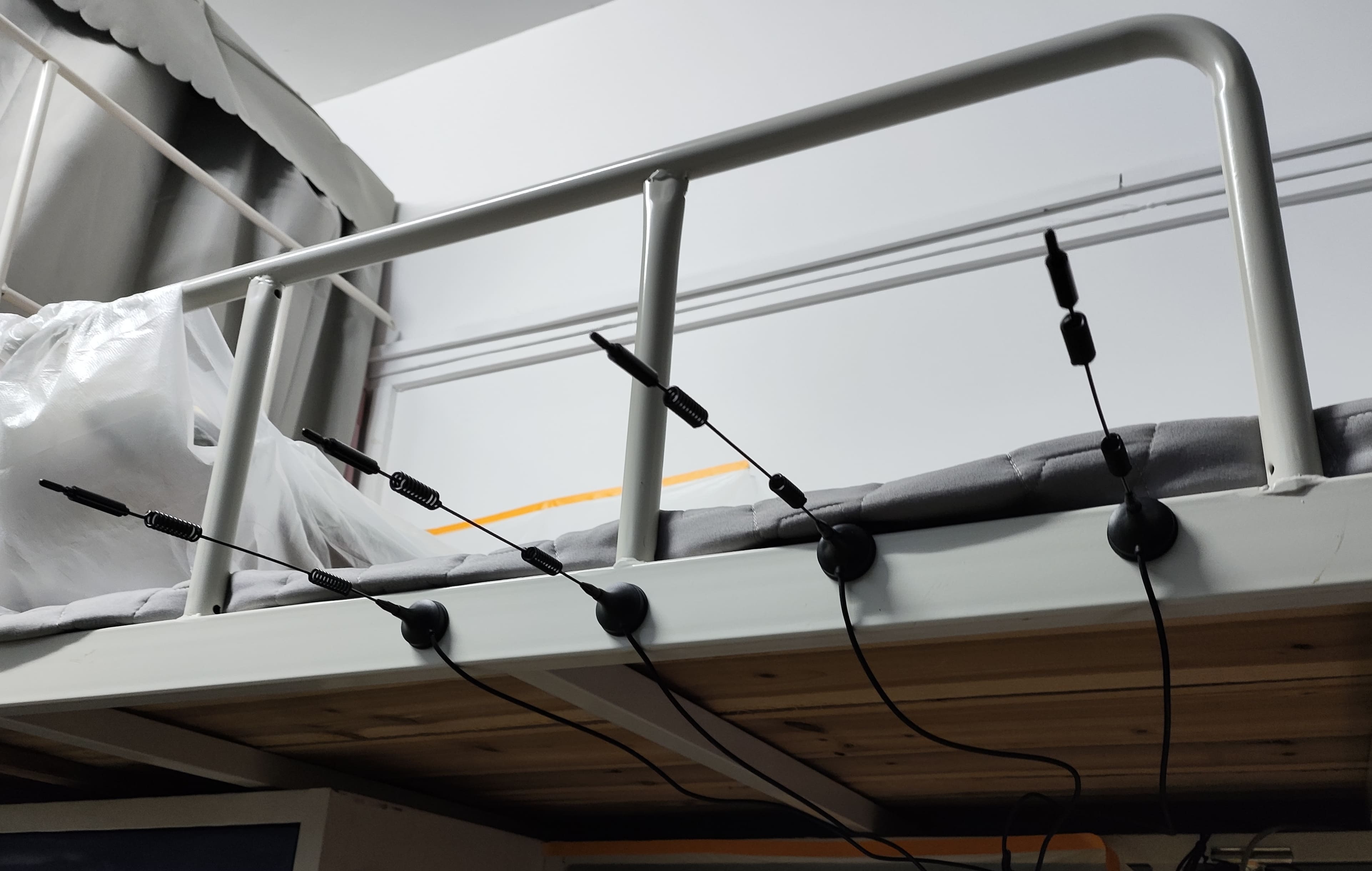
The 5G upgrade
The red-envelope money from Lunar New Year finally found a purpose. After the holiday, I picked up a 5G CPE on Xianyu so that the dorm network could remain highly available after the school connection became unusable around 7 p.m.
Yes, 7 p.m.
The official disconnection time used to be 11 p.m., but in practice the network gets bad much earlier in the evening. The reasons are probably not limited to one single bottleneck, and I will get to that later. On top of that, my roommates are very fond of WAN-based PvP games. I think one of them is Honor of Kings; they also seem to play Naraka: Bladepoint, though I am not too sure. I mostly play Genshin Impact. In any case, if the network starts fluctuating badly, they get beaten up by opponents, and I fail domains. So on many nights, by seven or eight o’clock, we have already switched away from the campus network and onto some non-campus route, usually the dorm’s “loudspeaker network” setup or everyone’s own mobile data cards.
Back to the 5G CPE. The unit is built around a Fibocom FM650, with four spatial streams. It connects to my soft router through USB and runs in CDC-NCM mode. Once it is up, there is basically nothing to babysit; it just works. It can hand out a /64 IPv6 address to downstream devices, though without a prefix. That is roughly enough for keeping Tailscale connectivity usable.
The SIM inside is a China Broadnet Futu card on the 192 number segment. Before discounts it is 29 yuan per month, after discounts 19 yuan, with 30 GB general-purpose traffic plus 30 GB “targeted” traffic. If you top up more, it can stack an additional 132 GB package. The targeted traffic is for things like Xuexi Qiangguo and Mango TV, so for my purposes it is almost equivalent to not existing. The interesting part is that the 132 GB package can also roll over, which means it is possible to use more than 150 GB in a month. Coming back from winter break, the first month could even go past 300 GB.
My location is in the 020 area. Using this card for Genshin Impact, latency usually sits around 80–90 ms. That is not too bad for this game. I have heard that Genshin uses Tencent Cloud resources in 0755, but for PvP players this latency may already be uncomfortable. For international traffic, when pulling JMS Hong Kong CMI through this card, the latency is slightly higher than China Mobile home broadband. I have not checked the exact traceroute, but I do not think it is detouring through the United States; it is more likely exiting through Shanghai.
As for why the traffic allowance is so large, my reasonable guess is that China Broadnet deliberately leaves this small benefit in place to retain users. It is well known that Broadnet cards often ride on China Mobile base stations, but Broadnet also has some of its own network resources, and the quality can be uneven. That makes the user experience not especially great in many situations. But if the quality is not great and the quantity is generous, then users who do not have demanding network requirements may still tolerate it. Like many people, I have “data shortage anxiety,” so having more traffic is never a bad thing.
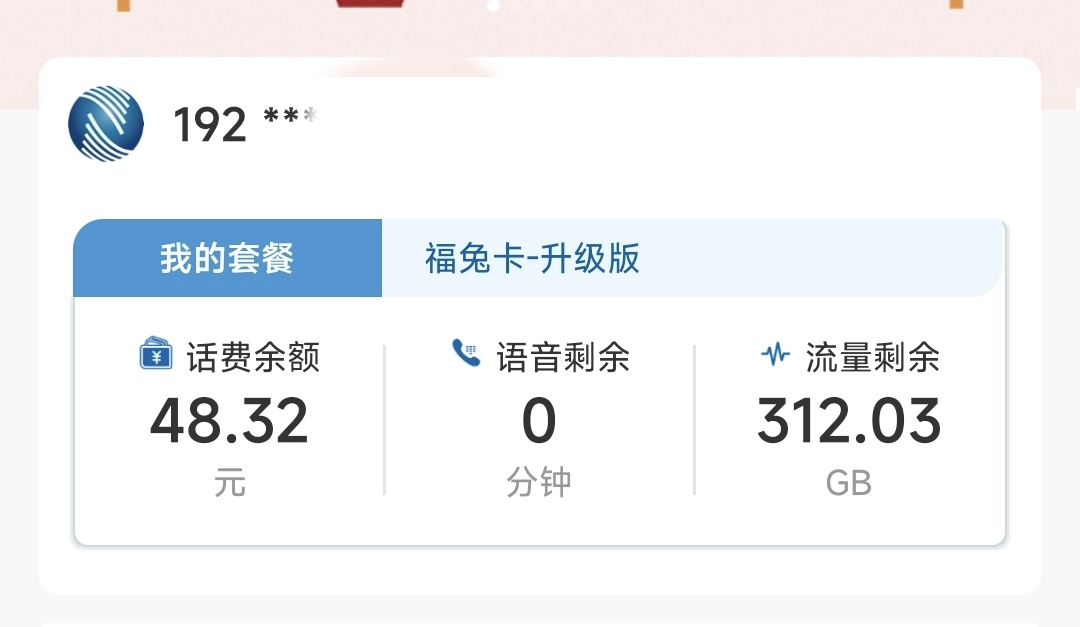
This card does have a problem, though. Download traffic is fine, but once upload traffic gets pulled heavily, it is very easy to run into serious QoS. At that point, the entire card’s network is almost cut off. Switching to a China Mobile card — also a proper regular SIM — does not produce this behavior. The problem is that the only China Mobile card I have on hand has just 60 GB of data, and it would be very easy to exceed that in a month, so I have never dared to use it as the main connection.
The most obvious change after moving to 5G is that the network no longer gets stuck at night. By “not stuck,” I mean that the 5G network currently seems to have lighter load, or perhaps the technology itself is simply better. Compared with 4G, packet loss and latency are both lower. Of course, this is also related to the fact that my previous 4G CPE design was not exactly ideal. After lights-out and network shutdown at night, the old 4G CPE would easily push Genshin latency above 500 ms, sometimes straight to 999 ms, to the point where even switching characters failed. With the current setup, latency basically stays stable.
Moving campus, moving uncertainty
For now, the 5G setup is working decently. Whether it will still work next month is hard to say.
The relocation plan has already been confirmed. At the end of this month, everyone will move to the main campus. It is only a little more than twenty kilometers away, but from a networking perspective it may as well be a different environment.
Piecing together the campus backbone
I am not familiar with the people at the network management center. If I asked them directly, they would probably ignore me; worse, I might end up being watched more closely. So the only option has been to infer things from scattered hints: fleeting screenshots in school promotional videos, procurement notices, and the occasional boast from teachers in class. From all that, I have slowly pieced together a rough picture of the school’s backbone network.
The campus I am currently on — call it Campus A — does not appear to have independent Internet access of its own. All traffic, including the campus intranet, the dedicated Internet line purchased from China Unicom, and the 300 Mbps education network connection that mainly exists to make the numbers look better, is routed over leased lines to the main campus, which I will call Campus B. From there, traffic goes out to the Internet.
The inter-campus connection seems to use multiple paths of “dark fiber plus wavelength division multiplexing.” The capacity should be at least 10G. In fact, upgrading it should not be difficult in principle; replacing the WDM equipment at both ends would basically do it.
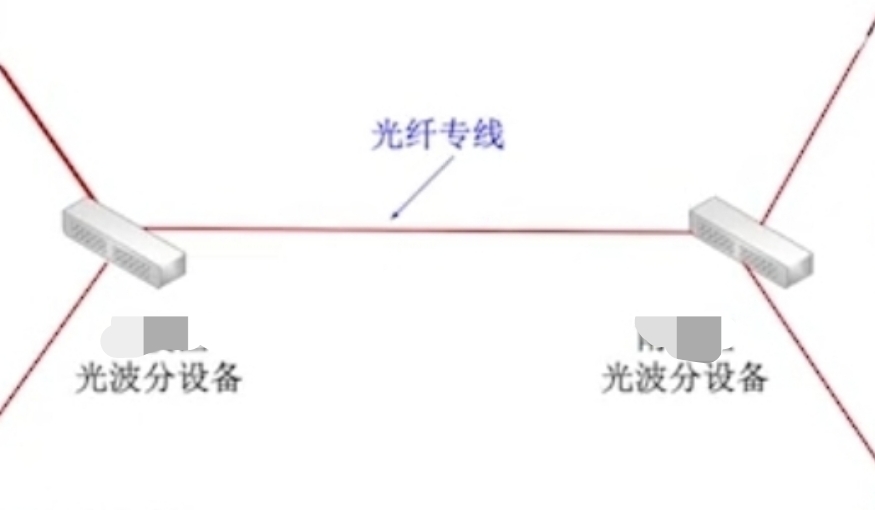
Is the evening slowdown a backbone problem, or an air-interface disaster?
Given how badly the network behaves at night, I do not think the bottleneck is likely to be that inter-campus link. It may be related to the campus Internet egress bandwidth, but the more likely culprit is what I would call an “air-interface disaster.”
That term may be something I made up, but it describes the situation fairly well. On Campus A, the dorms do not provide wired access. I once tried to get wired networking working, only to later learn that the exposed device was just an optical modem that had slipped out; after that, the cable was unplugged. So if you want to access the campus network in the dorm area, you have to connect directly to Wi-Fi. At night, when many people are online and so many radio devices are operating in such a small space, it is hard to imagine things not going wrong.
There is another possible factor. The dorm network on Campus A is essentially PFTTR, or PON-Based FTTR. In other words, OLT overload could also be one of the main causes.
What may change on Campus B
At the end of this month, we are definitely moving to Campus B, the main campus. According to friends who are already there, wired networking is available. Judging from the school website, however, it may require authentication through a Ruijie client. That means I may need something like Mentohust so that the soft router can handle the login.
If wired access really works there, it will also be a good chance to test the old question: was the nightly slowdown truly caused by an air-interface disaster, or is the campus network simply bad by nature?
On-campus P2P
One thing I noted before is that most places inside the school have Layer 3 connectivity with each other, except for areas such as computer rooms and dormitory zones, probably to prevent unauthorized network sharing. GRE also works internally; PPTP can dial successfully and be used normally. The internal network architecture probably has not gone as far as deploying DPI checks either. So in theory, on-campus P2P — basically BT traffic — should be feasible.
In practice, though, my observation is that many people around me do not really know what BT is. Some people are not even very comfortable typing URLs into a browser; I have seen someone try to visit Baidu by entering baiducom, without the dot. Even among those who know what BT is, there does not seem to be much interest in large offline files, except perhaps system images, which people in my major need once or twice every semester. What they prefer is smaller, constantly updated content on the Internet: instant messaging, online games, short videos, and things like that.
The next round of observations will probably have to wait until at least a month after the move.