“Strange, funny, and heartbreaking.” That tagline suits MOTHER 3 almost unnervingly well. After finishing it, the strongest feeling left behind is simple: it is a shame that such an astonishing JRPG is still far less known than it deserves to be.
The music is reason enough to care
Why start with the soundtrack? Because in my experience, every truly great RPG has exceptional music—and games with exceptional music somehow tend to be great anyway. So yes, I’m willing to be a little irrational here: great music = great game.
Words can only do so much. The full original soundtrack is available on YouTube, and it is massive: 250 tracks in total.
The main theme, “Theme of Love,” is especially unforgettable. There used to be a stunning piano arrangement online; only the first half survives now, because the original video was taken down and the second half seems to be gone. I can still remember the melody. Maybe one day I’ll try to reconstruct it. In the sixth measure, there is this wrenching diminished chord that captures the game’s emotional core perfectly—that sense of something beautiful turning suddenly painful.
The most distinctive music in the whole game, though, may be the battle themes. There are at least a dozen of them, all with wildly different styles, plus many variations. That is not just for flavor. The battle system actually hides a rhythm-game mechanic inside it. If you press the button in time with the music, you can chain attacks together. Early enemy themes tend to sit in neat, regular meters like 4/4 or 3/4. Later on, especially in boss fights, the music mutates into strange rhythmic patterns and tempo changes. It is an incredibly cool idea.
And then there is one of the funniest details in the game: seven important mystical figures are named Ionia, Doria, Phrygia, Lydia, Mixolydia, Aeolia, and Locria. The first time I played the game years ago, I barely knew any music theory. Coming back to it now and seeing those names again nearly knocked me over.
A game overflowing with ideas
What makes MOTHER 3 special is not just that it is clever. It is clever constantly.
Early on, while crossing a forest fire, the protagonist runs into these enemies:
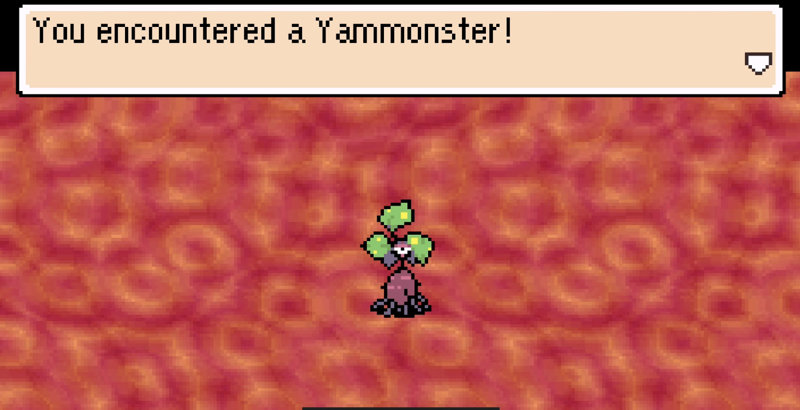 (A yam monster with three green leaves.)
Once the fire has burned for a while and is finally put out, you return to the forest and run into this instead:
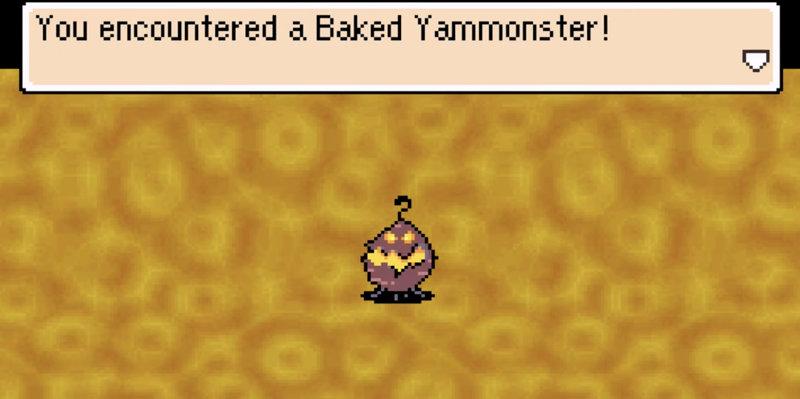 (A “baked” yam monster with its leaves burned off—now stronger, too.)
That kind of joke is all over the game.
At one point, the hero rescues a child from the fire, and both of them are covered in ash.
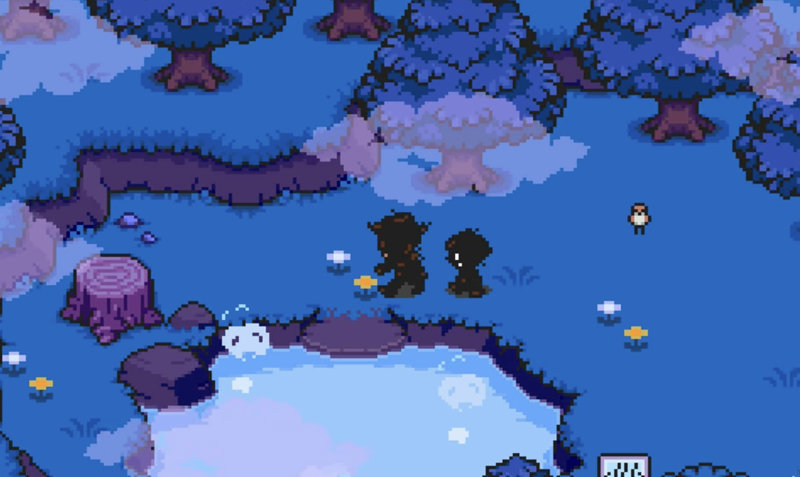 (Oh, a hot spring that restores HP!)
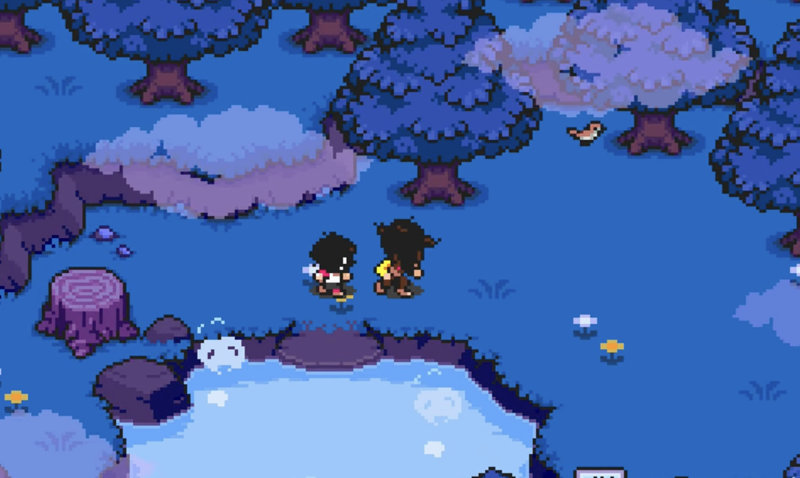 (HP fully restored! …and yes, exactly what you think happened did happen.)
Even the combat finds ways to feel fresh. It is turn-based, but it often feels strangely urgent. How does a turn-based RPG create real panic? Because a character who takes fatal damage does not always die immediately. Their HP rolls downward like the numbers on an old utility meter. If you act fast enough before it reaches zero, you can save them. In practice, this can make battles unexpectedly tense and exciting.
If you have played Undertale, some of this sensibility may feel familiar: the same absurd humor, the same care put into tiny surprises, the same way the ridiculous and the sincere are allowed to coexist. That connection is not accidental. Toby Fox was heavily influenced by the MOTHER series, and before Undertale, his first notable work was the MOTHER 2 Halloween Hack, which he created in high school.
Beneath the silliness, a world with teeth
The story goes places you would never predict at the beginning. Weird characters with stranger histories keep joining the journey, and as the adventure unfolds, the carefree world that initially feels almost like Harvest Moon starts revealing something much darker and more complicated underneath.
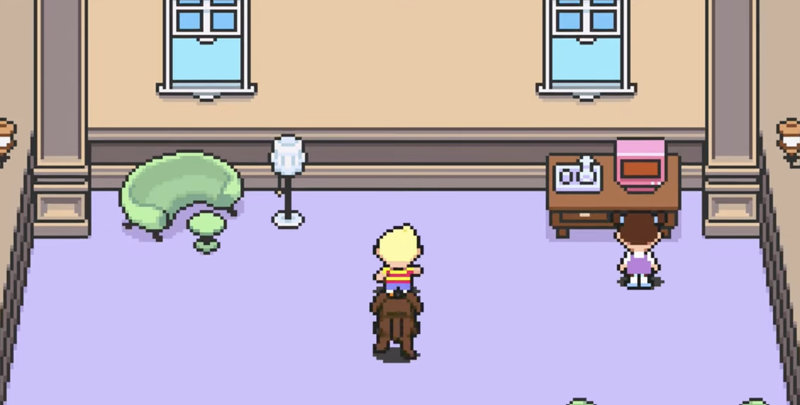 (Three years after the Pigmask Army’s invasion, every household has installed a “Happy Box,” an object that emits only a bizarre glow yet somehow makes people feel happier. The game never lectures, but it still lands as a brutal reflection of real-world absurdity.)
That is one of the game’s greatest strengths. It never turns into a sermon, yet it still grapples with weighty questions—politics and society, technology and the environment, history and the future, family bonds and larger moral duties.
At the same time, the emotional writing can hit with shocking force. One moment the game is playful and offbeat; the next, it sketches a character’s state of mind with astonishing precision. Sometimes it only takes a line or two before your throat tightens.
Despite the bright, oddball art style, the game is not without horror, either. Most of it remains cute and quirky, but there are a few psychologically disturbing moments, and even one or two jump scares.
As for the ending, “mixed emotions” does not even begin to cover it—and that is all it is fair to say.
Why it feels like a masterpiece
At first glance, MOTHER 3 can look like a bizarre little game that should not work. In reality, it has nearly everything people look for in a great RPG:
- outstanding music
- a battle system that is unusual and genuinely fun
- scene design packed with detail and invention
- memorable characters with clear personalities and histories
- delicate characterization and lines that can be deeply moving
- a rich and expansive world
- real thematic depth beneath the comedy
And it avoids plenty of the genre’s more tiresome habits:
- the story is not built around generic heroic posturing
- there is no obsession with grinding to level 99
- it avoids syrupy romance between the leads
- the final boss does not stop everything for a grand speech that sounds like a lecture hall manifesto
Well—strictly speaking, the protagonist is trying to save the world. But the game never feels trapped inside that cliché.
Why so few people know it
For all its brilliance, MOTHER 3 was not a major hit when it released in Japan. The response was modest enough that Nintendo canceled plans for an official Western release.
But great work has a way of surviving. The game eventually earned intense devotion from a smaller audience, and fans created an English translation patch themselves. Its quality is famously high.
Today, it is even possible to find an English ROM on the Internet Archive. With a GBA emulator installed, it is not hard to see for yourself why this game inspires such devotion.
A final note for anyone confused by the series naming: MOTHER 2 was released in the West as EarthBound, without the “2,” which threw off the numbering. MOTHER 3 never received an official Western release, though some people informally called it EarthBound 2. Toby Fox’s early rom hack was made for EarthBound.