Lately, a lot of people online have been claiming that if you send DeepSeek just <think>, it starts spitting out what looks like fragments from someone else’s conversation, like this:
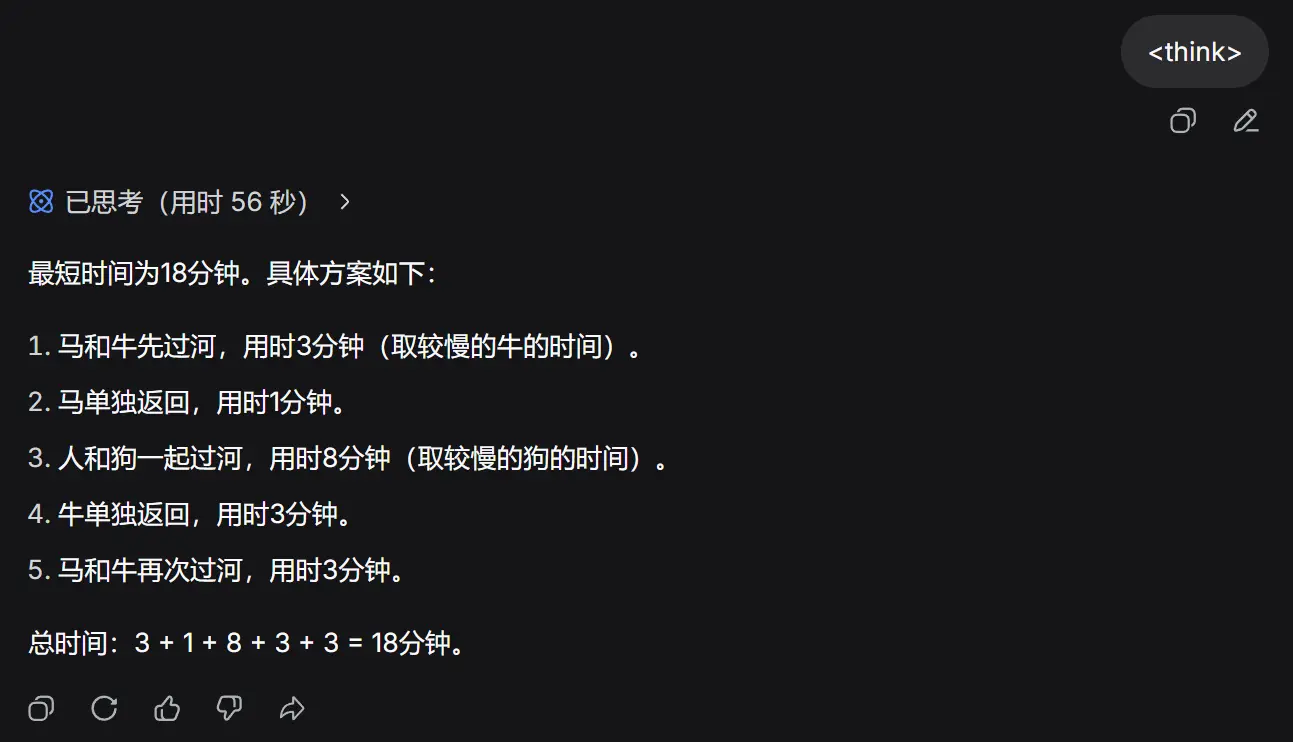
At first glance, it does look suspicious. The output can resemble a random dialogue snippet or some oddly specific internal monologue, which makes it easy to assume the model is somehow crossing wires and exposing other users’ chats.
But that’s not what’s happening.
This is not a data leak
DeepSeek is not making such a basic mistake that a single <think> would cause it to leak private conversations from other users. That explanation sounds dramatic, but it doesn’t really hold up.
<think> is a special token
During training, DeepSeek used <think> and </think> to mark chain-of-thought reasoning. In other words, <think> is treated as a special token rather than ordinary text.
So when a user sends <think> by itself, the model may interpret it as a signal that it should enter a reasoning mode.
What you actually sent was an empty instruction
The problem is that <think> alone does not include a real question or task. The model receives what looks like the start of a thought process, but no actual prompt telling it what to think about.
At that point, it can only keep generating text based on the language patterns it learned during training. The result may look like a real conversation excerpt, but it is not retrieved from another user session. It is generated probabilistically on the spot.
So the strange output is better understood as a hallucination triggered by an incomplete prompt, not evidence that the model has “switched channels.”
To put it another way: if a manager tells you only, “Think about it,” and gives you no context at all, you might start improvising too.