
On the morning of January 22, I woke up at around 9:30 and found a long list of missed calls. I have a habit of turning my phone off when I sleep, so nobody had been able to reach me. I called back right away and learned that my grandfather was unwell. With the Lunar New Year approaching, my parents were tied up with work at the factory and couldn’t leave, so the family hoped I could go back to our hometown first with my uncle—help my grandparents with chores and look after my grandfather while he was sick.
So that was how this trip home began.
Once I arrived, I ran straight into another problem: the internet. The signal bars looked full, but neither my China Mobile card nor my China Telecom card could really connect to anything. Even the neighbor’s Wi-Fi—the one that used to have the password 12345678—had changed its password. For a while, I was basically cut off from the internet.
Luckily, my younger cousin had come back with me, and his phone used a Guangdian SIM card. The signal was surprisingly good, and he had plenty of data, so he unwillingly became my personal mobile hotspot manager.
The grandfather I grew up with
My paternal grandfather passed away before I was born. My only memory of him is an old photo hanging on the balcony wall. I vaguely remember that when I was little, my father had colorized it from a black-and-white picture.
My grandmother passed away in May 2022. At the time, I was studying in Wuhan, and because of the pandemic, I couldn’t even go home to see her one last time. That remains one of the biggest regrets of my life.
The grandparents I remember most clearly are my maternal grandparents. But because of local naming habits, I’ve always called my maternal grandfather “grandpa” in the same way I would call a paternal one. Over time, that simply became natural.
His illness became more serious than we expected
When we got back, we realized my grandfather’s condition was much worse than we had imagined.
He had never been especially healthy to begin with. For a long time, he had needed oxygen support from a machine just to sleep. A few days earlier, he had felt a bit unwell and gone to the hospital for a checkup. But after waiting half an hour for the bus, he caught a cold. His lungs were already in poor shape, and with his other underlying health problems, by the time we arrived home he was constantly gasping for breath.
Still, he kept insisting he would get better in a few days. He delayed treatment and strongly refused to transfer to another hospital because he wanted to save money. There wasn’t much we could do, so he stayed in the local rural hospital first, even though its equipment and conditions were limited.
Two days later, his condition suddenly worsened one night. My uncle and grandmother stayed by his bedside the entire night without rest. The rural hospital didn’t even open at night, so all he could do was endure until morning. At 7 a.m., my uncle drove him to the hospital as quickly as possible and arranged for him to be transferred to a larger one. To be safe, they chose to move him by ambulance.
During the transfer, my grandfather lost consciousness. By the time he reached the hospital, he was put on a ventilator immediately. He remained unconscious for two hours, and then finally woke up.
The doctors’ initial assessment was that the carbon dioxide level in his lungs was dangerously high, which had severely affected his breathing. We were lucky he got there in time. If he had arrived even a minute later, he might have suffocated.
At first, the situation seemed to offer some hope. As long as the ventilator could help remove the excess carbon dioxide and support his lungs in time, he might still be able to recover enough to go home and rest.
But on Lunar New Year’s Eve, just as we were all waiting at home and hoping he might soon return, the hospital sent back the CT results. They showed that two-thirds of his lungs had become necrotic. Less than one-third remained functional, and even that remaining portion was not healthy—it could only barely maintain breathing.
If even a ventilator could no longer supply what his body needed, then the situation would become truly dangerous.
The whole family’s nerves tightened again. That night, none of us really slept. The usual joy of New Year’s Eve disappeared, replaced by a heavy, silent tension. We didn’t ask for anything unrealistic. We only hoped that remaining third of his lungs would be enough for the basic needs of daily life. We were not hoping he would ever run or do anything strenuous—only that he could keep living.
Thankfully, more good news gradually came from the hospital in the days that followed. That remaining third of his lungs was enough to support ordinary daily function. He was also becoming less dependent on the ventilator, and eventually he was moved out of intensive care.
After all those twists and turns, our fear slowly eased. With each better report from the hospital, smiles began returning to our faces. We all hoped he could come home soon, so our family could finally sit down together for a real New Year’s Eve dinner, even if belated.
The place I come from
Once my grandfather’s condition stabilized and started to improve, I finally had the peace of mind to look around and pay attention to the place that raised me.
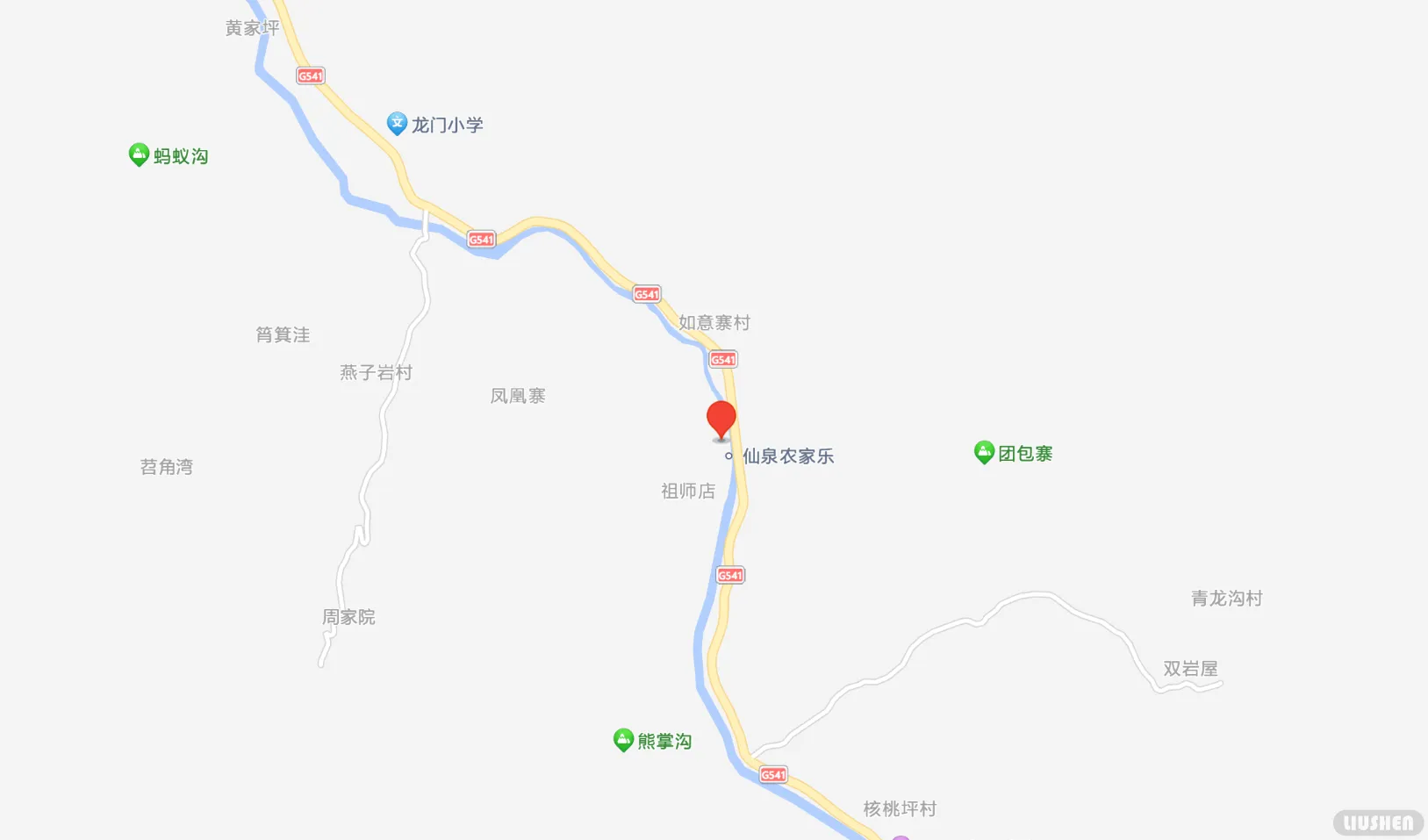
My hometown is Longshan Village in Baxian Town, Pingli County, Ankang City, Shaanxi Province. It is surrounded by green mountains on all sides, a place where streams and hills seem to belong naturally to one another. The village sits beside a flowing creek and leans against layered mountain ridges. The air carries the smell of earth and wildflowers, as if nature is always quietly speaking.
The village has already emerged from poverty along with the broader changes of the times, but if you look toward the distant mountainsides, you can still spot faint cooking smoke curling upward. That smoke says something simple and important: families are still living their ordinary, warm lives there.
At night, the whole village feels as if it has put on a sky full of stars. I like carrying a small stool upstairs in the old house and sitting there to look at the Milky Way. It had been a long time since I had seen it so clearly. The stars looked bright enough to tell old stories. In the distance, I could hear mountain birds calling softly in the night, and together with the darkness around them, they seemed to form their own kind of music.
In moments like that, the heart becomes quiet too. The mountain wind seems to wash away the noise of ordinary life, leaving behind only a deep attachment to home.
Longshan Village is a name that already sounds a little legendary to me. It holds my childhood laughter and dreams, but it also carries the stillness and resilience of the land itself. Every time I return, my affection for it starts flowing again like a small stream that never runs dry.
Snow in the mountains
On the third day after I came back, heavy snow finally began to fall.
I had spent the previous three years living in Wuhan, so this snowfall felt almost dreamlike—pure, soft, and long-awaited. My two younger cousins and I rushed outside into the sudden white world, running and playing beneath the swirling flakes. Unfortunately, the ground was too wet for the snow to settle, so all we could do was hope for more the next day.
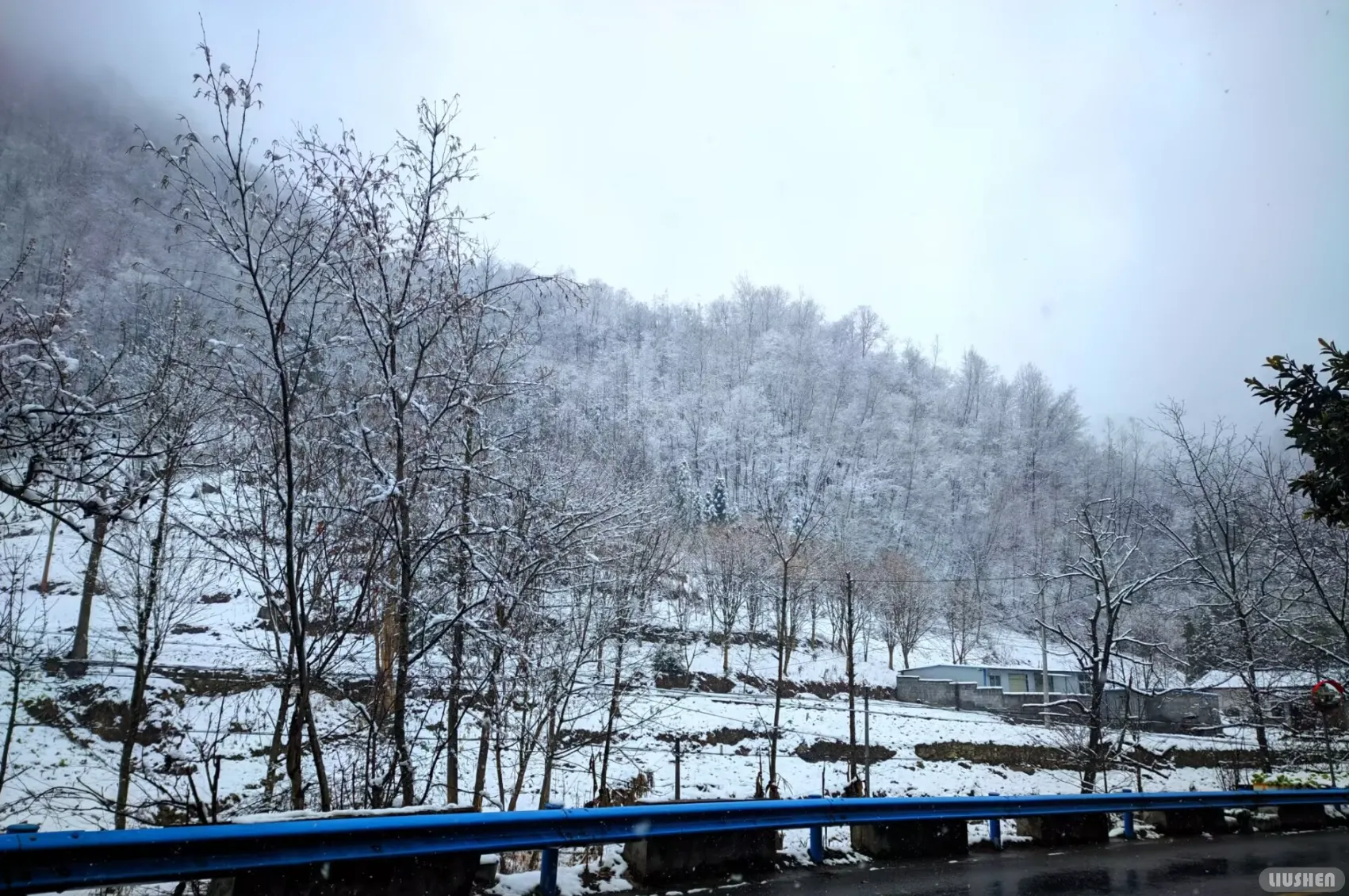
The next morning, I opened my sleepy eyes and found the world completely transformed. Everything had changed into white. Snow was still drifting down like countless light feathers, and the mountains looked as if they had put on a pale winter veil.
We stayed in that snowy world for as long as we could, letting ourselves enjoy it fully.
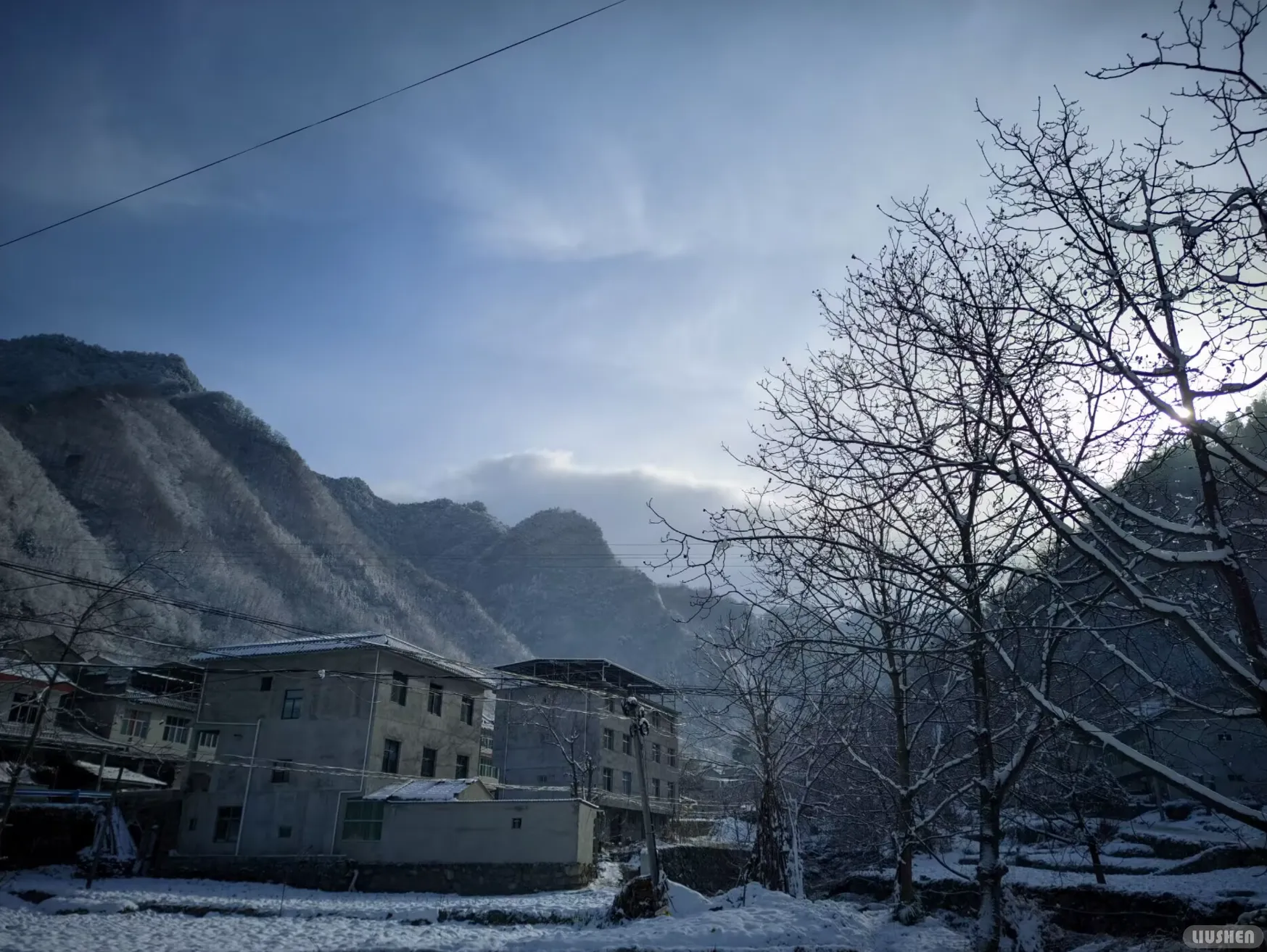
One of my younger brothers kept urging us to go out and play, then ran outside by himself. We worried about him, so we followed, and while we were at it, we tried to capture that fleeting beauty before it disappeared.
Standing in the mountains, I could see snow preserved along the slopes under the cold wind. The flakes moved with the breeze, softening the harshness of winter and giving the whole landscape a quiet poetry.
New Year’s Eve dinner
On New Year’s Eve, the dinner table was full of relatives. Everyone sat together for the reunion meal.
But my grandfather was still in the hospital, and both my uncle and my mother were there with him. Their absence left the table feeling a little emptier than it should have been. Even so, that absence did not erase the warmth of the gathering. In some ways, it made the moment feel even more tender.
The Spring Festival Gala played noisily on the television. A few relatives sat together nearby playing cards, using dried corn kernels as chips. Their laughter, the chatter around the table, and the sound from the TV filled the room so completely that it felt like the whole world was celebrating.
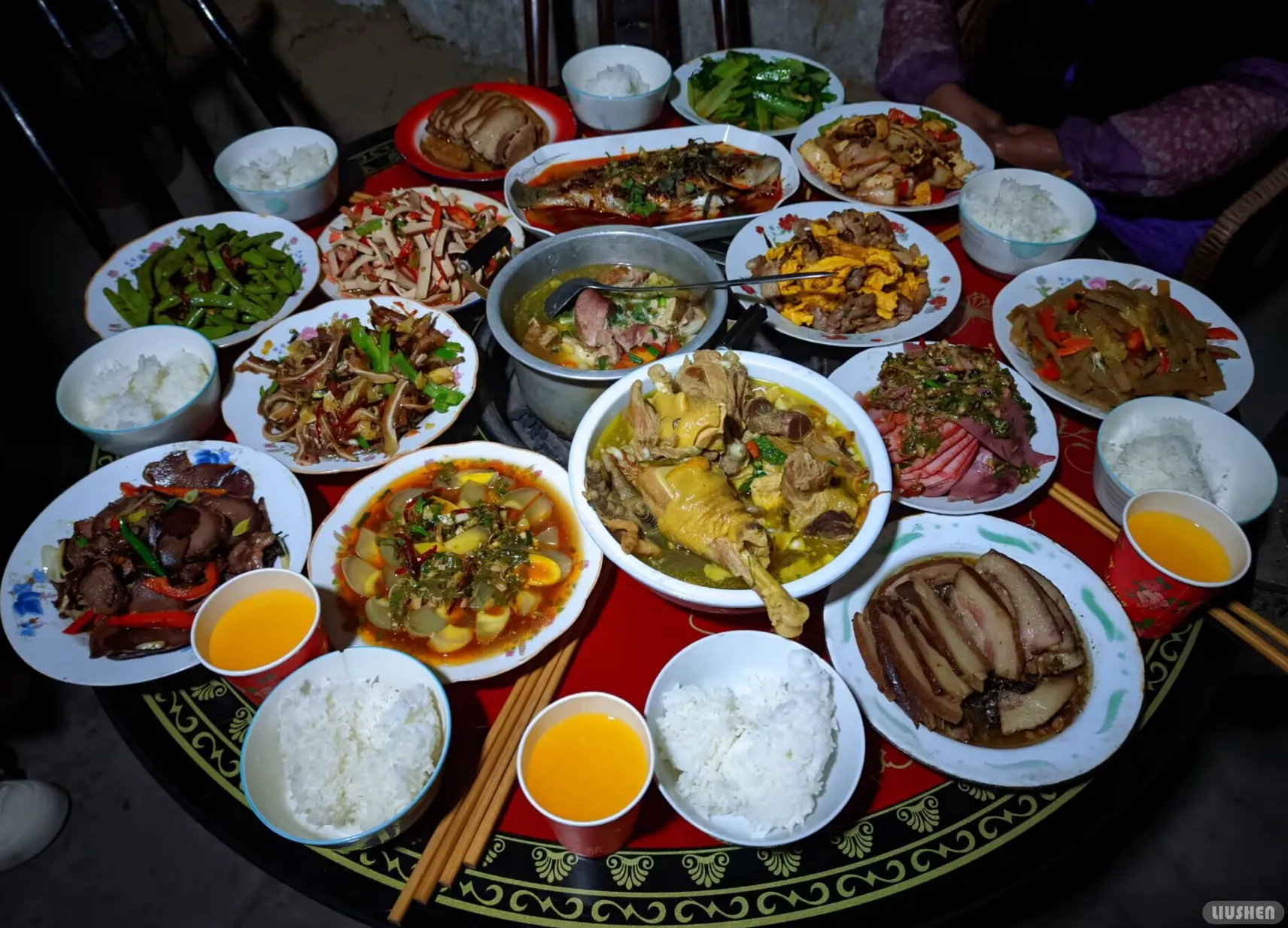
In recent years, I’ve often spent the New Year in the city. It is more convenient there, but the feeling of the holiday has grown thinner and thinner. In the city, something is missing: the smoky warmth of daily life, the plain and unadorned smiles of grandparents, the feeling of sitting around a stove roasting potatoes, the easy visits and greetings between neighbors.
Only when I come back to the village do I really understand what the New Year feels like. It isn’t just a change on the calendar. It lives in familiar scenes, in warm faces, in the ordinary things people do together.
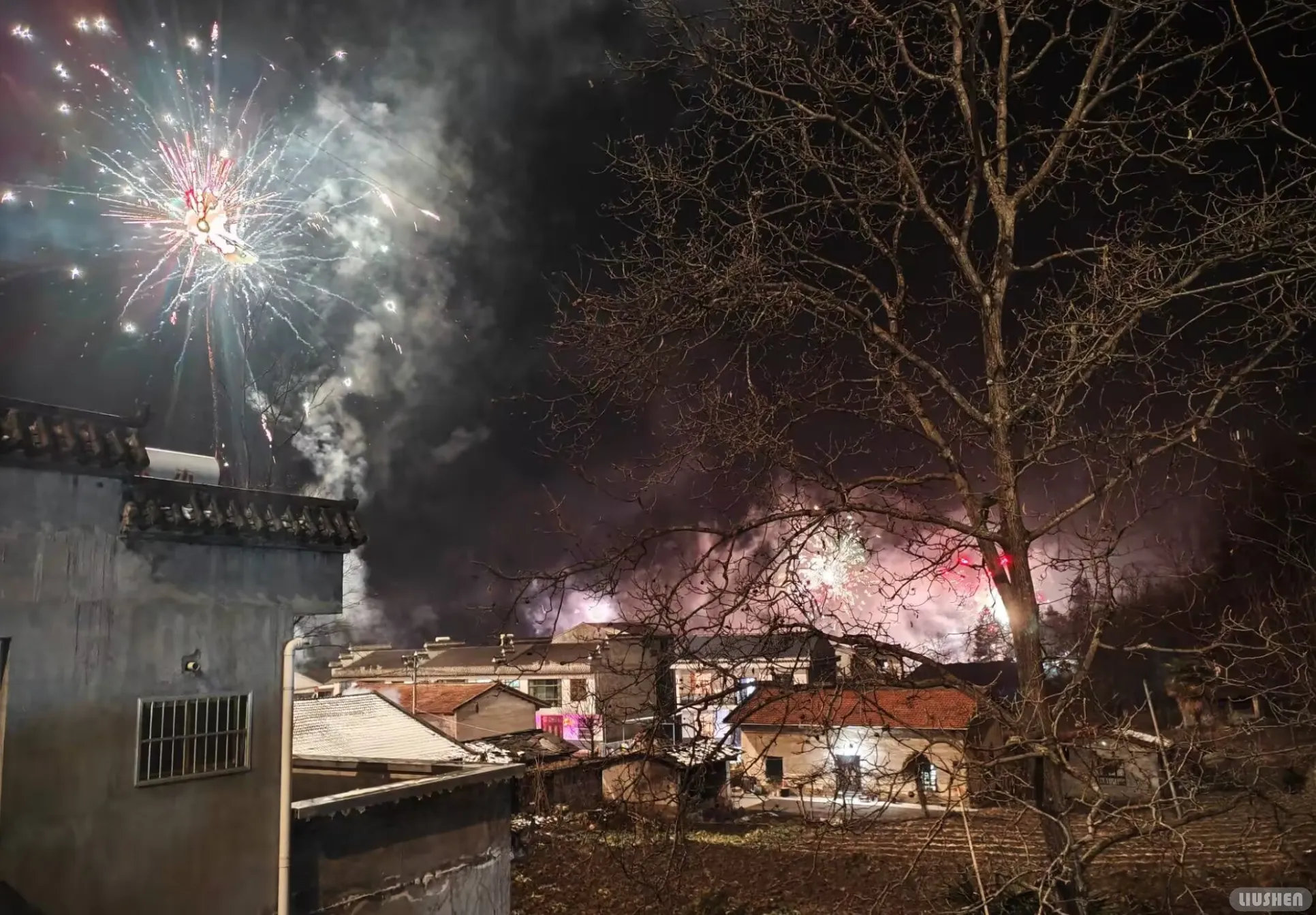
After dinner, we stayed up late to welcome the new year with my grandmother and the rest of the family. When the clock struck twelve, we looked up together.
In an instant, fireworks lit the entire sky. Bursts of color bloomed one after another against the darkness, brilliant and dazzling. Firecrackers sounded from all around us, and with each crack and echo, our hearts seemed to leap with them. In that moment, 2025 officially arrived—bringing with it the usual human mix of hope, anticipation, and the desire for better days.
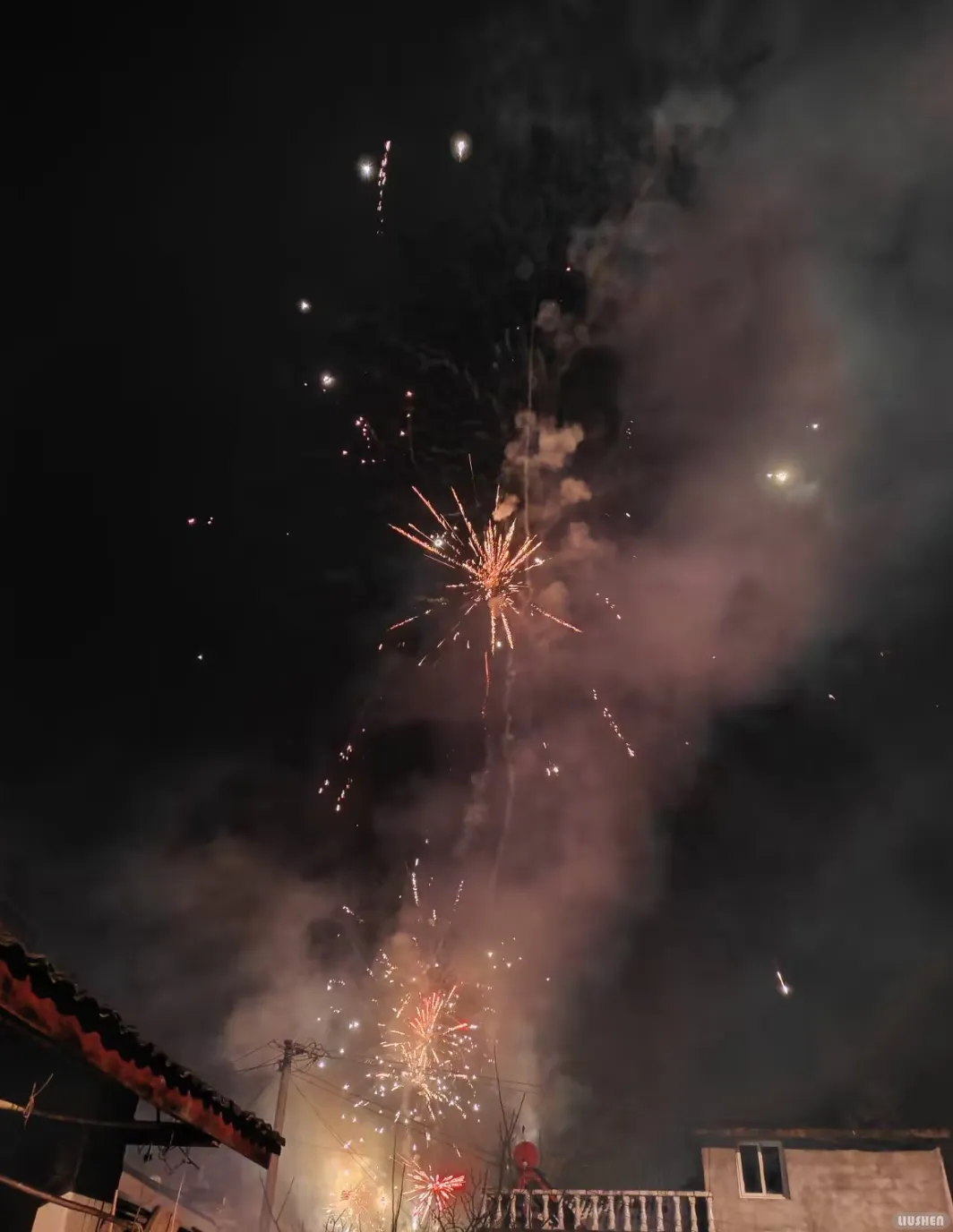
Lighting the way for the ancestors
There is a local custom we call shangliang. I don’t know how common the term is elsewhere, but the meaning is simple: on New Year’s Eve, a candle is lit for deceased ancestors so they will not be left in darkness on such a bright and lively night.
It is an act of remembrance, filial piety, and silent conversation between the living and the dead.
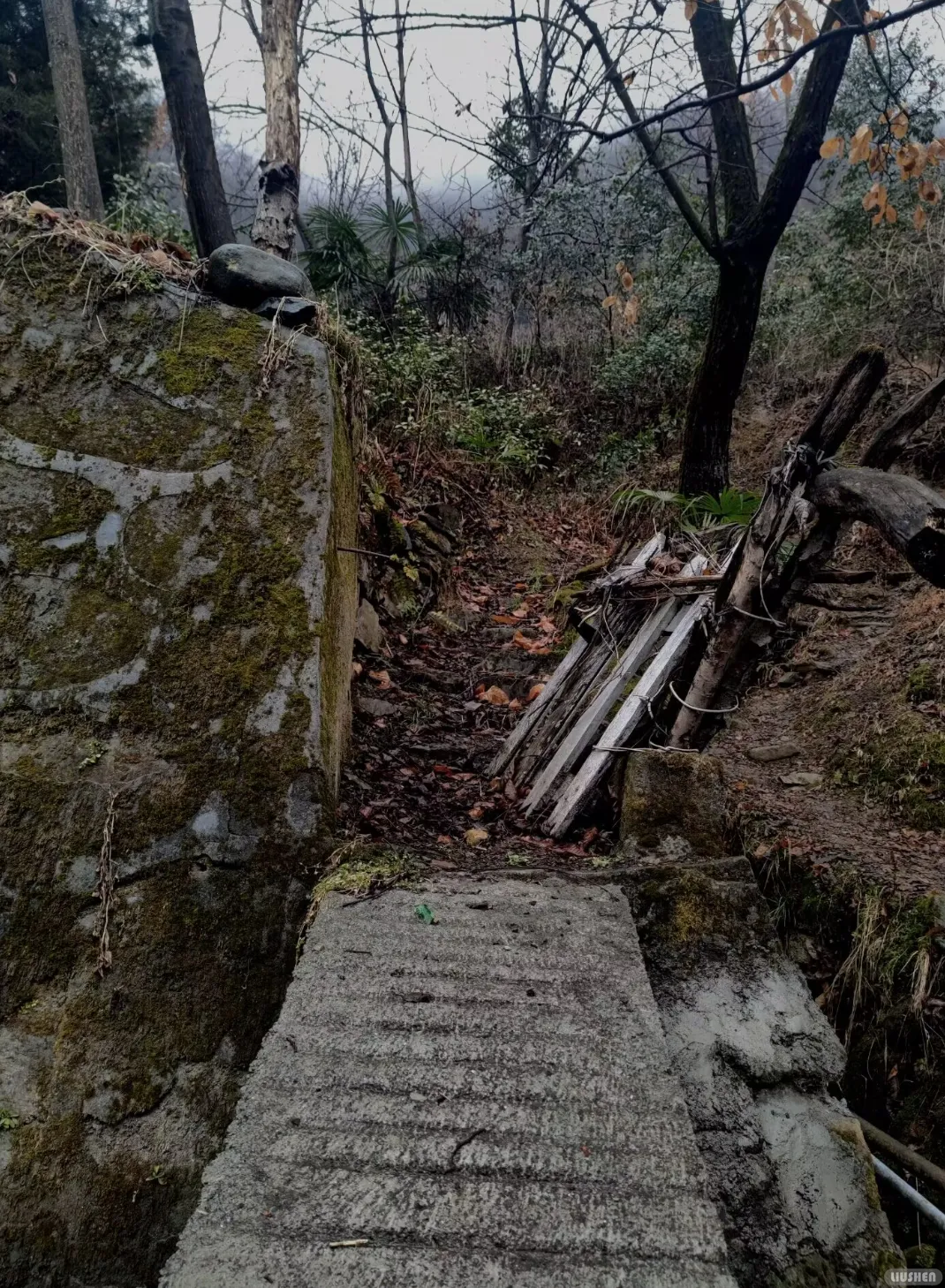
The trip up the mountain was not easy. It had just rained and snowed, so the path was covered in thin mud and extremely slippery. I went with my father, and honestly, if our ancestors hadn’t been watching over us, we might have ended up preparing for a funeral feast instead of a ritual—at least that’s how it felt.
I walked carefully the whole way, struggling for each step, while my father stayed close beside me.
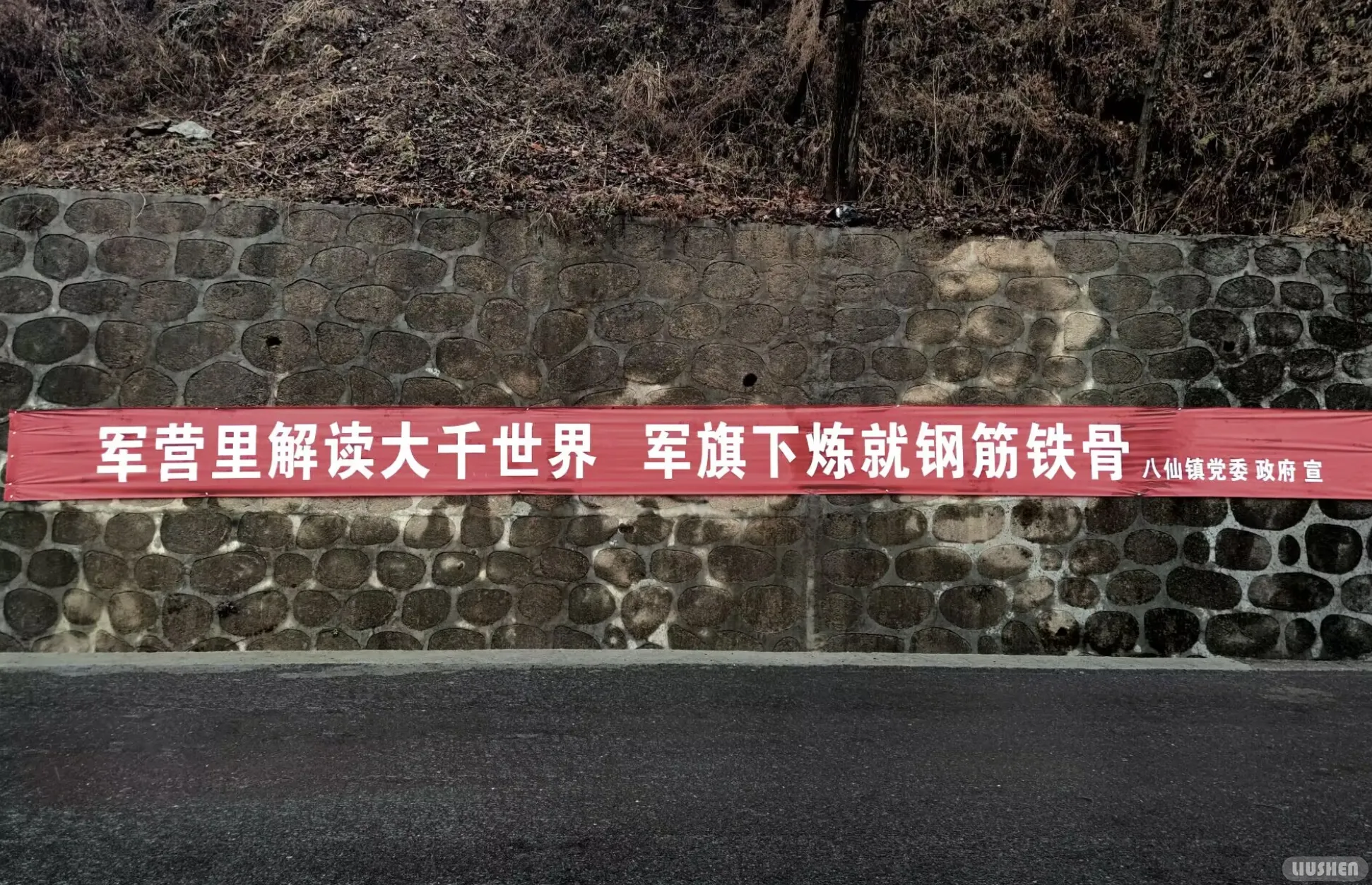
Eventually we got close to the gravesite, but the final stretch was steeper still. Even my father thought it was a bit challenging, and he had grown up in the mountains. For him, mountain roads were never a big deal. For me, though, they were another matter entirely.
After thinking it over, he decided to leave me halfway up the slope and continue deeper on his own. So I wasn’t able to light the candles personally, but sincerity matters more than form. The intention still reaches where it needs to go.
After candles were lit at the graves of my great-grandfather, great-grandmother, grandfather, and grandmother, I silently offered my respect and gratitude in my heart. Even in the cold, I carefully placed the candles before them with reverence and blessing.
Inwardly, I made a simple wish: that my grandparents would watch over me and bless me with health, happiness, and peace. It is a private wish, but also one that feels shared by many people—a hope that the people we love, whether here or gone, might still keep some light over our lives.
Leaving home again
Because my older sister had to return to work on the eighth day of the first lunar month, we also had to leave earlier than we might have liked. And so this trip home came to an end.
Even after leaving that familiar place behind, the warmth of it stayed with me.
Whenever I think of home, I still feel a softness in my chest. The figures of my grandfather and grandmother remain vivid in my memory. Time has left deep traces on their faces, but never diminished the love in them. What I remember most clearly is still that smile—the quiet curve at the corner of the mouth that seemed to carry the most sincere blessing for all of us younger ones.
That kind of love is real, simple, and selfless. It has warmed my life, and I think it will continue to ease many of the worries I carry in the future.
Along with longing, there is gratitude too: gratitude for the elders who accompanied me through the years; gratitude for the shelter they gave us; gratitude for the wordless care that taught me how to stay resilient and warm, even when life is difficult.
Even when I am far away, that feeling remains like a light in the distance, reminding me not to forget where I began, and not to forget the people who once gave me more love and companionship than I knew how to measure.
Daily photo
I’ll use one of my own photos here.
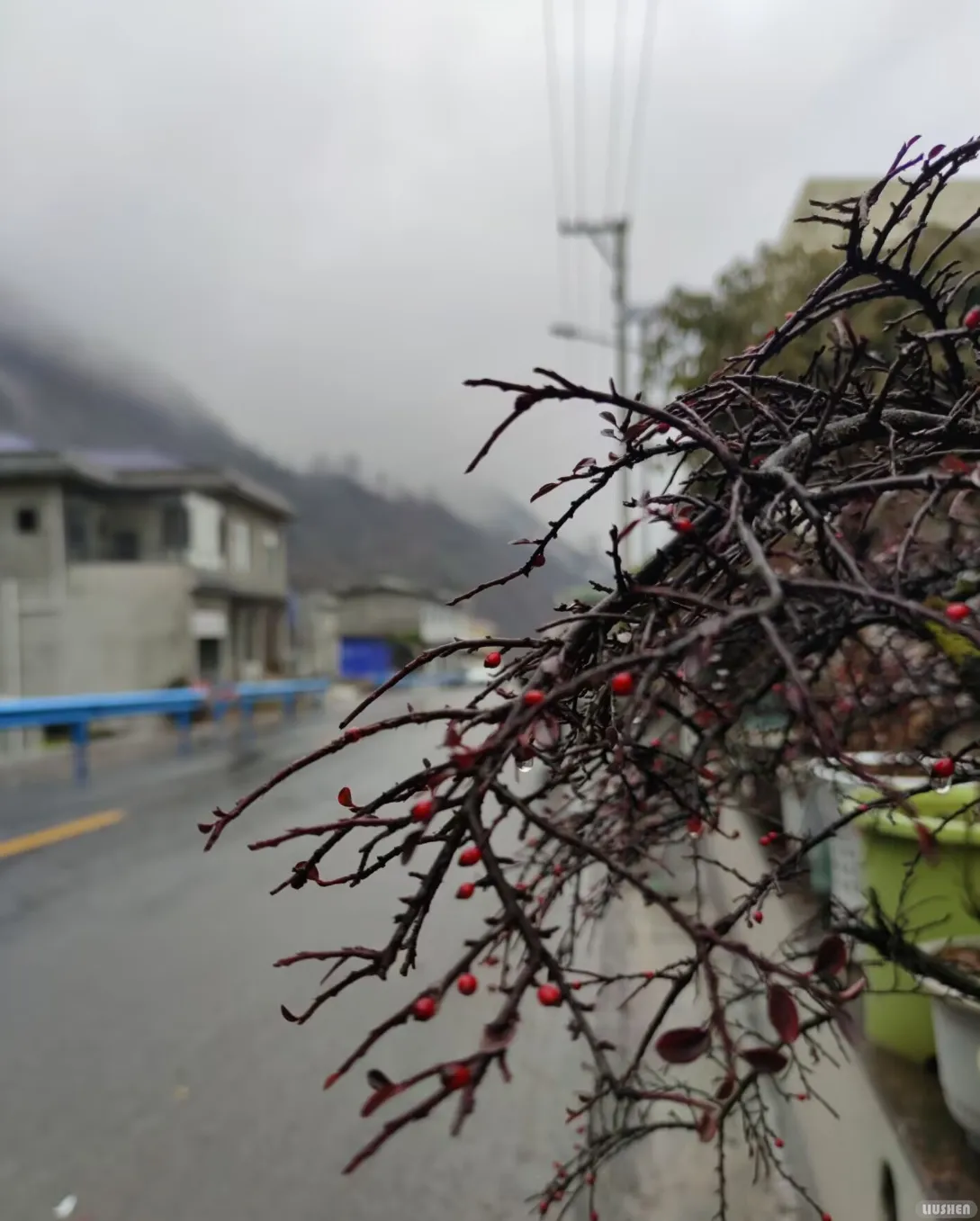
An unnamed roadside flower