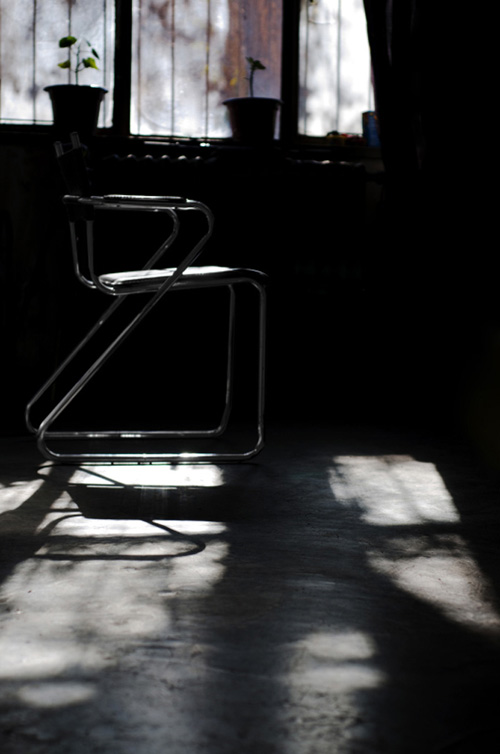
Glass transformed daytime interiors. Once windows became common, indoor spaces gained far better access to natural light, and the arrival of glass curtain walls pushed that even further. But the convenience of sunlight indoors comes with a problem: when the light is too strong and too direct, it can make a room surprisingly uncomfortable. Simple ways to soften that light exist, yet they still are not widely used in everyday homes.
In a typical home, window glass transmits about 85% of visible light. On a clear day at noon, when sunlight enters directly, the floor area hit by the sun can reach around 21,000 lux. Lux is a unit of illuminance. At the same time, parts of the room that are not directly lit often remain at only 500 to 2,000 lux, which means the uniformity of indoor illuminance can fall below 0.1.
That kind of contrast forces the eyes to keep adjusting the size of the pupils as a person moves between bright and dim areas. The eyes do not always adapt as quickly as the body moves, so objects in darker parts of the room can become hard to see. In some cases, the visual strain can even cause dizziness.
The root of the issue is not simply that the room is bright, but that the light is concentrated. Ordinary glass has high transmittance but very little scattering, so the sunlight that reaches the floor remains intense and focused. Interior finishes can make the imbalance worse. Many residential floors have a reflectance of about 0.3, and dark flooring or carpet may be even lower. A white wall may have a reflectance around 0.7, while darker walls reflect less. When surfaces reflect little light back into the room, the result is poor distribution and uneven brightness.
Large buildings such as stadiums and conference centers often address this much better. One common approach is tubular daylighting. Optical devices collect sunlight and channel it into a tube, which carries the light to the area that needs illumination. At the end of the system, a strongly diffusing material such as PC or another similar material spreads the light in many directions, creating more even illumination.

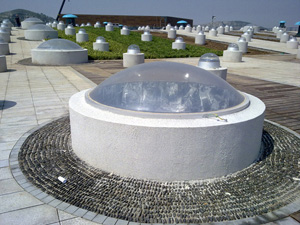
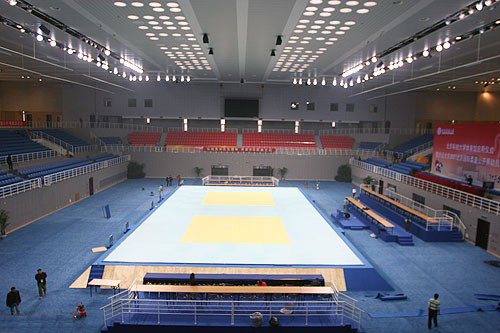
This technology has clear advantages, but it is not an easy fit for ordinary households at the moment. Installation and maintenance are inconvenient, and the cost is beyond what most families would consider reasonable.
So is there a simpler solution for homes? Yes. Traditional paper-covered windows offer a useful clue. In older buildings, paper was used over window openings. The overall indoor brightness was lower, but the light was distributed far more evenly, which created a comfortable visual environment.
Some people assume that paper-covered windows must have made interiors too dark. In practice, the illuminance people need in daily life is not especially high. A large reading room is generally around 500 lux, an office around 200 lux, and a typical living space at home about 50 to 100 lux. Compared with those figures, a paper-covered window does not necessarily produce a dim room. Under direct daytime sun, the average indoor illuminance could reach around 1,000 lux, depending on the size of the building.
Of course, modern homes do not need to return to paper windows. A much simpler method is to use two layers of curtains. Most curtains people use are blackout curtains, intended to create darkness and provide privacy. If a second layer of sheer curtain is added, it can be drawn during the day when the sun is shining directly in or whenever the light becomes too harsh. The sheer fabric turns direct sunlight into diffused light, allowing the whole room to feel bright rather than glaring.
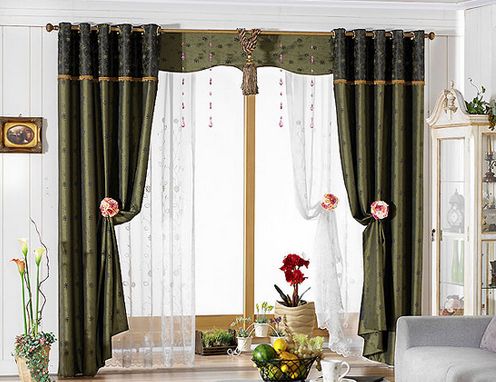
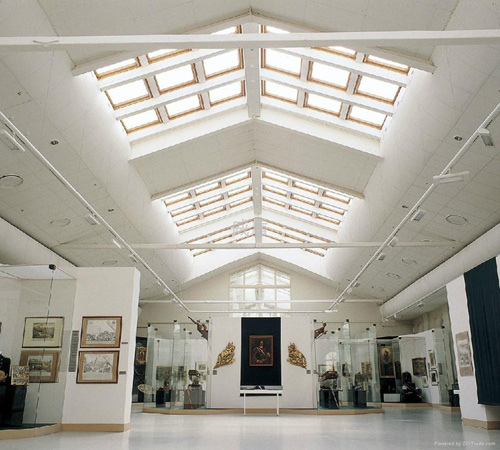
The same principle is used in many large buildings. Skylights are often paired with shading devices or frosted glass so that incoming daylight is softened before it reaches the interior.
Interior color choices can help as well. Lighter wall paint and lighter-toned flooring improve the way light spreads through a room. Small adjustments like these can noticeably change the indoor lighting environment.