For years, Japan has often been described as East Asia’s advance server: the place where social problems appear first, before similar pressures show up elsewhere. That phrase can sound glib until the details of the post-bubble years are placed side by side with the social changes now familiar across much of East Asia: young people leaving big cities, a rush toward government jobs, credential inflation, poverty among the highly educated, pressure on hospitals, the spread of temporary work, unmarried and isolated old age, adult children dependent on parents, and the steady weakening of the old middle-class bargain.
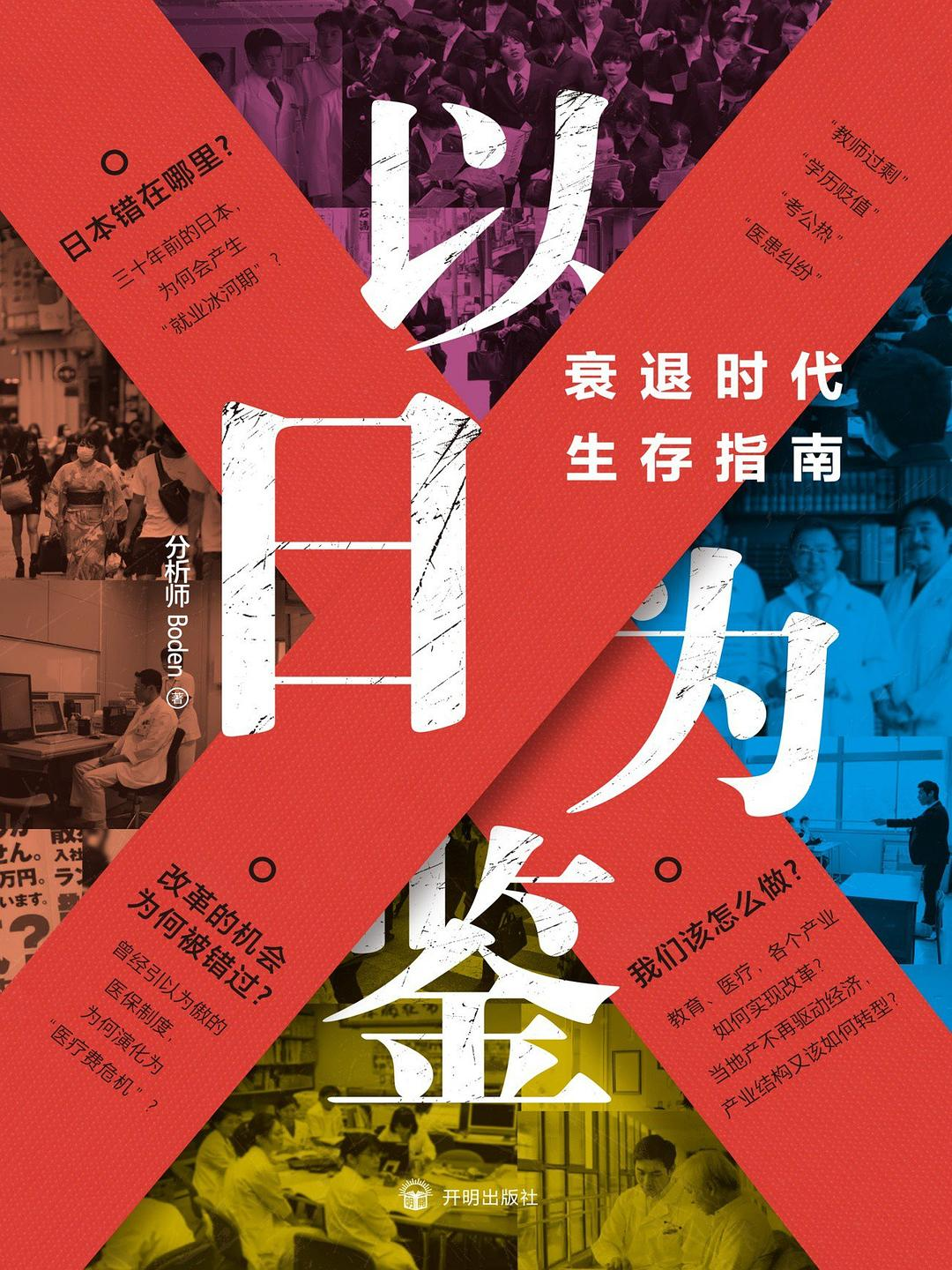
The subtitle of A Mirror in Japan: Survival Notes for an Age of Decline is a little deceptive. It is less a manual than a record. Its value lies in the sequence of events it reconstructs: how a society that had believed in stable work, rising wages, and the power of education discovered, often too late, that the institutions built for growth did not know how to handle stagnation.
Japan as the advance server
Japan belonged to the same broad Confucian East Asian cultural sphere as South Korea, China, and Taiwan, and that makes its post-bubble trajectory especially unsettling. During the downturn, Japan saw the rise of terms and phenomena that would later become recognizable elsewhere: the return-to-hometown employment wave, the civil-service exam fever, degree devaluation, high-education poverty, medical system strain, the temporary-worker era, adult children living off parents, disconnected society, bankruptcy in old age, and female poverty.
None of these appeared as isolated accidents. They were linked to the collapse of an economic model that had tied education, employment, marriage, housing, welfare, and retirement into one chain. Once the labor market stopped absorbing young people, every other link began to loosen.
The employment ice age
Japan kept its official unemployment rate below 5 percent through much of the so-called employment ice age, but that stability was purchased at a high cost. The burden fell disproportionately on new graduates.
According to statistics cited from the Japan Association of Private Universities and Colleges, by 1998 more than 71 percent of companies believed skill development was the responsibility of employees themselves. Workers, in other words, were expected to pay for their own growth. More than 40 percent of companies stopped setting aside training budgets for new hires. The effect on university graduates was immediate: many entered workplaces without the training once provided by firms, struggled to adapt, and left quickly. During the employment ice age, the three-year turnover rate for university graduates reached 30 percent. One in three could not settle into the workplace. During the bubble years, that figure had long stayed below 7 percent.
The decade beginning in 1993 became known among Japanese university students as the employment deep-freeze period. Over those ten years, the employment rate for university graduates fell from 85 percent to 55 percent by 2003. The labor market looked stable only because a generation of young people absorbed the instability.
The long-term damage did not disappear when the economy later stabilized. A 2020 Ministry of Finance statistic showed that graduates from the employment ice age remained the lowest-income group in Japan. In that sense, those graduates had not escaped the ice age even after thirty years.
Temporary work became the mechanism that held the system together. From 1993 to 2003, the share of temporary employees in Japan rose from 19 percent to 32.4 percent. After that, roughly one in three workers was a non-regular employee. Among them, 65 percent were university graduates from the employment ice age. Many spent almost their entire careers in low-paid temporary positions. Today, they are often discussed under the label of the ice-age generation problem, and how to support their old age has become one of Japan’s largest social policy questions.
A generation that entered adulthood at the wrong moment
The tragedy of this cohort is hard to understand without remembering their childhood. Their first twenty years unfolded during rapid growth. They watched Japanese companies dominate global markets. They saw older students being fought over by large corporations. They heard stories of entrepreneurs obtaining enormous financing in a first meeting. They reached the edge of adulthood just as the bubble was at its brightest.
Then the economy broke.
The group that graduated between 1993 and 2003 later came to be called the lost generation, especially after the popularity of the book The Lost Two Decades in 2012. The phrase does not simply mean people who were unlucky. It refers to a generation whose life chances were sacrificed to preserve the existing system.
Why did Japan not protect young workers by reforming lifetime employment for older workers? Institutional inertia was part of the answer, but the deeper reason was financial risk. After the nationwide real-estate frenzy, the average Japanese household carried debt equal to 3.1 times annual income. Families had effectively borrowed against three years of future earnings. After land prices collapsed, the banking sector’s bad-loan ratio approached the critical threshold of 5 percent. If the government had immediately pushed through labor reform and large numbers of older workers lost their jobs, mortgage defaults would likely have surged. The financial system was already too fragile to absorb another shock.
This helps explain why the government initially avoided breaking lifetime employment. It did not set out from the beginning to sacrifice university graduates entirely. Early policy was more about delaying their entry into the labor market. If the economy had recovered quickly, postponing youth employment might have saved both older and younger workers. What the authorities did not foresee was that the downturn would last not a few years, but decades.
Between 1992 and 1995, Japan introduced two major measures to reduce pressure on graduate employment: redirecting young people to rural areas and expanding graduate school enrollment.
The rural policy relied on a three-year infrastructure program that encouraged university graduates to work outside metropolitan areas. Later, it was remembered as a movement to flee Tokyo. According to Ministry of Health and Welfare figures, the diversion policy sent nearly 300,000 university students to rural areas and smaller cities over three years. It reduced employment pressure in Tokyo while temporarily bringing new population into local communities.
At the same time, graduate school thresholds were lowered. By 1995, 64 percent of students at national universities chose to continue into graduate study. This postponed the employment problem, but it did not solve it.
In 1995, the number of new jobs began to rebound from the bottom, and many students believed the worst was ending. The hope was real, but so was the hidden problem: the policies had only delayed entry into the labor market. Eventually, the same students still had to find work.
From 1996 onward, the government gradually halted large-scale infrastructure investment. Many rural jobs created by public spending disappeared quickly. Graduates who had been diverted to smaller cities were forced back into big metropolitan labor markets. Between 1996 and 2000, Tokyo alone gained 270,000 people, 70 percent of whom were university graduates within five years of graduation. At the same time, 1996 brought the first graduation wave after the expansion of higher education. Across all education levels, the number of jobless people reached 800,000, while another 2.6 million university students were still waiting to graduate. The economy was still contracting, and the labor market could not absorb such a large number of educated young people. That year, the university graduate employment rate fell to 65 percent.
In 1996, the government amended the Worker Dispatching Law and promoted labor dispatch. Companies were encouraged to reduce the share of regular employees and use temporary workers as a new reservoir for employment. After this reform, lifetime employment was largely closed off to university graduates. For the next decade, one in every two university graduates became a temporary worker.
The damage went beyond employment status. This reform also changed corporate ideas about human resources. Japan’s old company system had treated young regular employees as long-term investments. Once firms could rely on dispatched and non-regular labor, the incentive to train young people weakened. At the time, society did not yet recognize these graduates as victims. Instead, many accused them of lacking effort or ambition, giving rise to labels such as the broken seventies generation. They missed the benefits of lifetime employment but bore the cost of its collapse.
The forgotten years after 1997
At the start of 1997, the Nikkei index returned above 21,000 points. The brief recovery led many people to believe the economy was finally back on track. Government white papers even began warning of the risk of overheating. Students again allowed themselves to imagine normal lives.
Then the Asian financial crisis arrived.
The collapse of Yamaichi Securities, one of Japan’s four major securities firms, became the opening sign of a deeper crisis. Bad loans that the government had delayed confronting for nearly seven years erupted. The bad-loan ratio rapidly approached 10 percent, and the financial system began to break down.
Before 1997, Japan still had the capacity to address graduate employment but did not act decisively. After the financial explosion, policymakers were consumed by crisis management. In five years, Japan changed prime ministers four times. The government eventually had to issue an additional 40 trillion yen in debt to rescue companies and barely contain the crisis.
From 1997 to 2003, almost no one in Japanese society had the attention to spare for university graduates. There were too many failing companies to rescue. Graduate employment fell down the priority list. One stark example is that during those five years, the government did not pass a single law specifically targeting university graduate employment.
This is why the same cohort later became known as the forgotten generation. They were like children left in the corner while the adults fought a fire. By 2003, the employment rate for Japanese university graduates had fallen to 55 percent. Nearly half of each graduating class was jobless.
The income gap persisted. According to Ministry of Health, Labour and Welfare statistics, members of the lost generation earned 25 percent less at age 35 than graduates from the bubble era. They also earned less than graduates who entered the labor market after the employment ice age, making them the lowest-income group among three adjacent generations.
The rural boom that could not last
The return-to-hometown employment wave was built on enormous infrastructure investment and large volumes of private capital. Many jobs were artificially created. Once investment stopped, they vanished.
In 1998, as the Asian financial crisis deepened, Japan experienced its largest bankruptcy wave since the bubble burst. The government issued huge amounts of debt to save failing urban companies. Rural areas suffered two shocks at once: infrastructure capital was pulled out of villages and small cities to rescue urban firms, and resort developments built with bank loans collapsed as the banking system itself faltered.
In simple terms, the rural model had depended on debt-driven construction. When that model stopped working, the employment prosperity created by public works collapsed.
Nagano is a vivid example. The city had briefly flourished because of the Winter Olympics, but in the year after the Games ended, heavy debt triggered a severe economic decline. In 1999, Nagano’s manufacturing sector fell by 30 percent, 211 companies declared bankruptcy, and the pace of decline set a postwar record for local economic contraction. Restaurants and hotels built during the investment boom were left empty. Long-term debt later made Nagano one of the cities nearly bankrupted by hosting the Olympics, giving rise to the phrase Nagano’s curse. But Nagano was far from the only region with serious debt problems.
The dankai junior generation: born surplus, raised for competition
The dankai junior generation refers to the roughly 18 million Japanese people born during the second baby boom of the 1970s. From birth, they were marked by excess: too many children, too much competition, too few future seats. They competed from elementary school through university. When they finally entered society, the bubble economy collapsed.
They were caught between eras. They did not inherit the economic dividends enjoyed by their parents, yet they were too old to receive many of the later protections designed for younger cohorts. They became the sandwich layer of Japan’s lost thirty years.
At birth, however, they had been considered Japan’s luckiest generation. In 1960, the Ikeda cabinet launched the Income Doubling Plan, calling for gross national product and per-capita national income to more than double within ten years. Japan’s per-capita national income rose from 395 dollars in 1960 to 1,592 dollars in 1970, a fourfold increase in a decade. Society moved beyond the era of a rich nation and poor people.
When the first members of the 1970s cohort were born, they enjoyed one of the best living environments in Asia. Their parents benefited from rapidly rising incomes and relatively cheap housing. Before 1980, homes in the suburbs around Tokyo usually cost no more than six times a family’s annual income.
Today’s Japanese young people have learned to live with stagnation. Saving money, avoiding reckless consumption, and maintaining a low-desire lifestyle have become practical tools for surviving downturns. But thirty years ago, universities did not teach any of this. In an age of continuous growth, who would teach students how to work and live through a shrinking economy? The 1970s cohort became the first experimental generation of Japan’s downturn.
They were trapped in a loop of failed self-proof. Parents and society told them that effort led to success. Yet many worked hard for years and received no positive feedback. They had good credentials but could not find good jobs. The gap between expectation and reality left them misunderstood by society and unable to reconcile with themselves.
During the first decade after the bubble burst, from 1991 to 2001, they lived under constant social suspicion. Beginning in 1997, Japan’s youth suicide rate began to surge. By 2003, it had nearly tripled, and youth suicide remained high for years afterward.
By 2019, even the youngest members of the dankai junior generation had turned 40. Many companies considered them lacking in energy and refused to renew dispatch contracts, pushing them from dispatched-worker households into even more precarious temporary-worker households. In 2021, Japan’s national poverty rate was 15.6 percent, meaning one in six households met the national poverty standard. Among single-parent households, the poverty rate reached 44.5 percent. Once parents divorced, children could face the basic worry of not having enough to eat.
The average annual income of a dispatched employee in Japan is 2.63 million yen. The relative poverty line is an annual income of 2 million yen. Many dispatched workers live just above or near poverty, and children born into dispatched-worker households grow up with poverty and discrimination.
A sampling survey by Nikkei found that 61 percent of children raised in dispatched-worker households felt hostility toward their parents and society, compared with 27 percent among children from households with regular employees. The 2007 television drama Papa to Musume no Nanokakan, about a 47-year-old father and his 16-year-old daughter swapping bodies and coming to understand each other’s lives, appeared against this background of unusually severe parent-child resentment.
Degree society and the collapse of credentials
From 1994 to 2004, the starting salaries of university graduates rose by less than 10 percent. The growth rate was only about one-third that of high-school graduates over the same period. The wage gap between university and high-school graduates narrowed quickly, creating a large class of low-paid white-collar workers.
Japan later called this rapid devaluation of education the collapse of credentials. Alongside the collapse of the middle class and the financial collapse, it became one of the three great collapses of the Heisei era.
Once degrees lost value, society began to doubt education itself. In 2024, only 450,000 people in Japan took the university entrance examination, the lowest figure in nearly thirty years. Fewer than half of high-school students were willing to sit for the exam, and the employment market showed a shift toward lower educational requirements.
During the worst years, the competition among university graduates became so intense that some described university students as servants. In 1997, starting salaries for university graduates again posted negative growth.
There was also a reason behind credential devaluation that Japanese society was reluctant to discuss openly: the 1990s were a period of unusually strong intergenerational inheritance. Family background increasingly mattered in ways that undermined the idea that education alone could change one’s fate.
In the 1990s, degree devaluation remained relatively slow. University graduate salaries held roughly stable, and options such as civil-service exams or returning to one’s hometown still seemed viable. After 2000, however, the brutal phase began: credential devaluation during the super employment ice age.
After the marketization reforms in higher education, Ministry of Health, Labour and Welfare statistics estimated that the lifetime cost of becoming a national university graduate was about 50 million yen, while the cost for a private university graduate was about 80 million yen. Yet the lifetime wages of a dispatched employee were only about 130 million yen. For a family that bet heavily on education, the calculation could become devastating.
The highly educated people of this period were the last generation of Japan’s elite-education faith. From childhood, they were taught that credentials were everything. Their parents told them knowledge would change destiny, so they staked their lives on schooling. Then, upon entering society, they discovered that the diploma earned through years of pressure was rapidly losing value after the bubble collapsed.
The logic resembles the credential society described in theories of diploma inflation. First, as more people obtain higher degrees, jobs raise their education requirements. Second, when more people hold a given credential, that credential loses bargaining power in the labor market.
The pattern had appeared elsewhere. In the United States, educational credentials devalued rapidly during an earlier period, and the long-built credential society began to loosen. At the peak of the hippie movement in the mid-to-late 1970s, only around 45 percent of American high-school students entered college, the lowest range in twenty years. With economic recovery, employment improved and inflation was contained, and mainstream American ideology returned to the credential model. The college enrollment rate of high-school graduates rebounded from 49 percent in 1980 to 62 percent in 1990, rising even faster than in the 1960s, and the value of degrees increased again.
Japan’s problem was that the downturn lasted long enough to damage both the credential system and the generation that believed in it.
The civil-service fever and its reversal
During the bubble years, choosing civil service was not seen as a mark of ambition. On Japanese Yahoo, one popular discussion asked whether becoming a civil servant during the bubble era was unusual. People who entered work in the 1980s often replied that they were grateful they had become civil servants only because they had not been excellent enough for the private sector. At that time, it was almost common sense that less competitive students became civil servants.
The private sector offered benefits that made government work look dull. Regular employees could receive two annual bonuses, paid overseas vacations, and access to company-arranged resort hotels. Larger firms often signed long-term room agreements with hotels so employees could stay for free during holidays. Early episodes of Crayon Shin-chan included many plots in which Hiroshi Nohara enjoyed free company resort benefits. Over time, that setting faded from the animation and was replaced by stories of Misae booking cheap hotels, a small but telling reflection of changing corporate welfare.
Some public-sector jobs were considered 3K jobs: dangerous, dirty, or demanding. The Ground Self-Defense Force, police, and firefighting were typical examples. Young people often avoided them, and applicants could essentially expect admission if they applied. There was even a joke that during the Ground Self-Defense Force exam, an examiner might point to a wrong answer and say, perhaps you should take another look.
The irony is that public works changed the hierarchy. Massive infrastructure revenue created powerful local interest groups. In the early 1990s, Japan even saw an inversion in which central government officials were relatively poor while local civil servants were rich. Under the stimulus of infrastructure investment, something like a county-town Brahmin class emerged. Local public employees connected to agriculture, forestry, public works, and construction interests earned handsomely. Many students from prestigious universities began crowding into local civil-service exams.
Then the system turned. Local civil servants who had seemed like life’s winners in the early 1990s suddenly faced wage arrears. For many Japanese public employees, 1998 became a dividing line.
The salary-system reforms beginning in 1999 delivered the final blow. By 2023, the average annual salary of local civil servants had fallen to 4.7 million yen, only about half the peak level of the 1990s. Central government posts had long been dominated by graduates of top universities; local civil-service jobs were the more accessible route for ordinary people. But after the 1999 fiscal reforms, local civil-service work remained low-paid and fiercely competitive for two decades. Large infrastructure projects stopped, local finances deteriorated, staffing quotas shrank, and debts from the public-works era made it difficult for local governments to pay salaries. The civil-service exam fever cooled.
A similar pattern appeared in other supposedly secure fields. During the downturn, one generation of graduates rushed into medicine, teaching, and government, believing these were iron rice bowls. But all three fields later faced shocks. Even those who had successfully landed as doctors, teachers, or civil servants did not necessarily obtain the stable lives they expected.
Fertility misjudgment and the late awakening
Japan’s fertility crisis was also shaped by timing. Masuda Hiroya, one of the earliest public figures to warn about Japan’s low-birthrate problem and later an expert on population issues, recalled that society badly misread population trends. Because the 1980s failed to take early action to stimulate fertility, the country only woke up in the 1990s, when the number of newborns had already begun to plunge.
This was another example of a system responding after the window for low-cost action had passed. A society built around stable male employment, marriage, housing, and childrearing discovered that once employment security weakened, birth policy could not be repaired by slogans alone.
Medical conflict, punishment, and defensive medicine
Japan’s medical tensions in the 1990s were not simply a story of doctors versus patients. They emerged from the contradiction between medical expectations, aging, and fiscal limits.
One recurring question was whether harsher punishment of doctors helped patients. The answer was often the opposite. Patients became the real victims of a punitive medical environment. To avoid arrest or lawsuits, doctors began choosing the options with the lowest legal risk rather than the options best suited to each patient.
Medical ethics has a well-known example called the cesarean effect. In American medical history, a doctor was fined heavily because a baby suffocated after a cesarean section was not performed. After the judgment, cesarean rates across the country surged. Other doctors overused cesarean procedures to avoid litigation risk. The term later came to describe the broader tendency of doctors to choose conservative or legally safer treatment plans because they fear medical lawsuits.
Japan saw its own public controversies. In one widely discussed case, the father of Dr. Mori became a focal point. He refused repeated out-of-court settlement offers from Kansai Hospital worth more than 100 million yen, insisting that the issue was not money but truth and medical justice. His struggle was not only about seeking justice for his son’s death. It exposed the exploitation and neglect of resident physicians: excessive workloads, inadequate guidance, and institutional pressure. These details resonated widely because they revealed a structural problem rather than a single accident.
In 2004, the OECD issued a report on the global medical industry. Japan’s pharmaceutical and medical systems had fallen sharply in ranking compared with the 1980s. The OECD stated clearly that Japan’s medical system was not shaped by competition but by a series of government standards, which severely hindered fair competition in the pharmaceutical market. The same year, the Ministry of Health, Labour and Welfare conducted a similar survey and likewise concluded that Japan’s medical industry had declined substantially since the 1980s.
Drug quality had already shown warning signs. In the 1980s, Japan reported fewer than 2,000 adverse drug reactions per year. By 1996, the number had surged to 16,000. The speed of deterioration was obvious. The government was not unaware of the problem, but in order to control medical spending, it adopted a nearly permissive attitude.
From 1996 onward, major drug safety incidents struck public confidence almost once a year. The most infamous was the Green Cross scandal. Green Cross, then Japan’s largest blood-products manufacturer, used blood materials that had not undergone viral inactivation in order to cut costs. More than 1,600 patients were infected with HIV, and by the time the case broke, 600 had died. The scandal ended with the arrest of Matsumura Akihito, the Ministry of Health and Welfare official responsible for biological products. This became the Heisei-era AIDS drug disaster, a case that nearly destroyed the reputation of Japan’s entire pharmaceutical industry.
The government later absorbed the lesson of the low-price-first competition of the 1990s. At the time, generic drugs were governed by a last-place competition logic: for a similar drug to enter health insurance coverage, its price had to be the lowest. The intention was to encourage companies to develop generics early. But because later entrants had to price even lower, the system created severe price trampling and dragged the entire price structure down without limit.
Centralized procurement intensified the problem. Since procurement often prioritized low prices, pharmaceutical companies cut prices further to win bids. Once one company cut prices, all others had to follow. In the end, companies had no profits and lost the ability to guarantee quality. This bottomless price competition was a major reason for industry-wide losses among generic-drug makers and the serious quality crisis of the 1990s.
Patients, however, could not easily see these mechanisms. In a society shaped by the belief that the customer is god, traditional expectations held that medical care was a foundation of social security: it should not be too expensive, service should be good, and doctors should act with benevolence. This idea was so deeply rooted that any flaw in service was easily blamed on the doctor’s ethics.
Medical ethics contains an impossible triangle: high-quality care, efficient diagnosis and treatment, and low prices cannot all be achieved at the same time. The United States sacrifices price and efficiency to obtain relatively high medical quality. Japan’s DPC payment reform, by contrast, sacrificed some aspects of high-quality individualized treatment in exchange for efficiency and affordability, trying to keep medical care broadly accessible.
After DPC reform, Japanese medicine spent the next twenty years troubled by a central problem: hospitals became overly focused on efficiency, sometimes placing throughput above patient health.
A 2023 Ministry of Health, Labour and Welfare report noted that over the twenty years of DPC trials and implementation, Japan’s patient mortality rate did not significantly decline. Those two decades were among the fastest periods of global medical progress, which suggests that DPC may have had negative effects on the health level of Japanese residents. DPC also carried a hidden risk: hospitals sharply reduced redundant medical capacity, because redundancy lowered profitability. In normal times, this risk was easy to ignore. In a major infectious-disease outbreak, it became dangerous.
The result was visible during the 2020 pandemic. Japan’s severe medical strain was rooted in the lack of reserve capacity at hospitals. The system suffered heavily in the black-swan event because medical institutions had not kept enough spare resources. Ministry statistics attributed 35 percent of total deaths to severe shortages of doctor resources.
Yet DPC cannot be dismissed entirely. In a certain sense, it saved Japanese public finances, maintained relatively stable medical services, and preserved a basic level of treatment despite limited funding. This is also one reason Japan’s health system could, under tight financial constraints, remain near the top of World Health Organization evaluations for a long time.
The essence of doctor-patient conflict is not that doctors and patients naturally have irreconcilable interests. It is the contradiction between medical capability and economic development during social change. Japan’s easing of medical conflict was less the result of one direct solution than of policies that reduced related pressures elsewhere. Japan had already experienced severe doctor-patient conflict in the 1960s; the original novel The White Tower was born in that context. Hospitals were powerful then, and patients had to provide evidence when investigating medical accidents. After the medical reforms of the 1970s, Japan developed healthier doctor-patient relations in the 1980s. The renewed conflict of the 1990s came from aging and fiscal shortages, not from some eternal hostility between physicians and patients.
What makes the record unsettling
The most disturbing part of Japan’s post-bubble history is not any single number. It is the order in which problems appeared. First came the attempt to preserve the old employment system. Then young people were pushed into delay, dispatch work, rural diversion, graduate school, public-sector exams, and low-paid white-collar jobs. Credentials lost value. Local governments that had flourished on public works became debt constrained. Medical care was forced to balance price, efficiency, and quality under aging pressure. Fertility policy reacted late. The children of precarious households inherited poverty and resentment.
Japan did not experience decline as one dramatic collapse. It experienced decline as a sequence of temporary compromises that became permanent arrangements. A generation was told to wait for recovery, then discovered that waiting had become its life.