This was probably one of the most conflicted trips I’ve taken, and one of the hardest travel journals to write.
My travel notes usually fall under a long-running category with a whimsical name, but this time I wanted a new one: Travel Gone Wrong. Because that’s exactly what this was—a record of a failed trip.
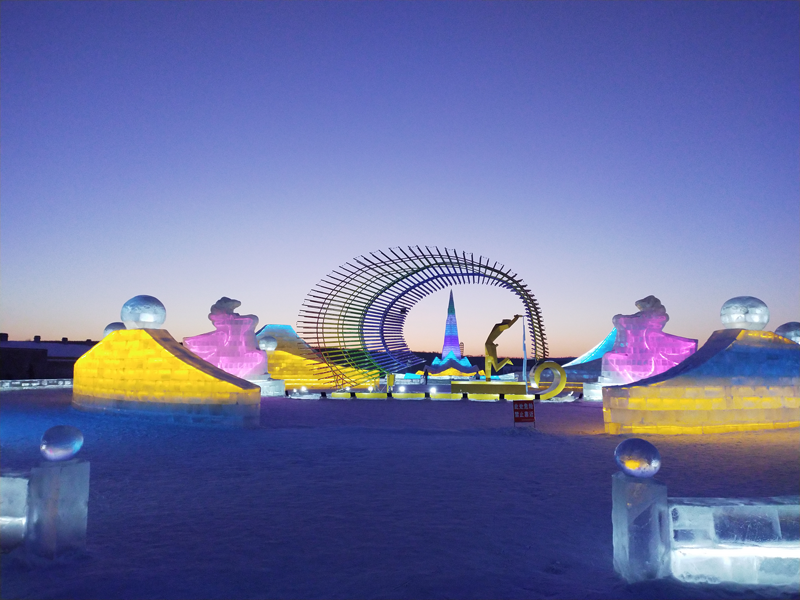
January 23 — The Day Before Departure, Shenyang
A sudden extra holiday made me wonder whether I should squeeze in one more trip before Lunar New Year. But I had to be back home by New Year’s Eve, so going too far didn’t seem realistic.
Then again, “not too far” is relative. Had I gone south the same distance, I could have ended up in Shanghai. Instead, I chose Mohe, the northernmost city in China.
Spring Festival should come with at least a little festive feeling, and I’ve always liked doing needlessly complicated things around holidays that interest me. Before leaving, I wrote a pair of spring couplets. At first I was going to write something like, “Troubles are as countless as stars; wherever life goes, there are still green hills ahead.” But when I spread the red paper out on the table, I changed my mind. I thought I should try to sound more upbeat.
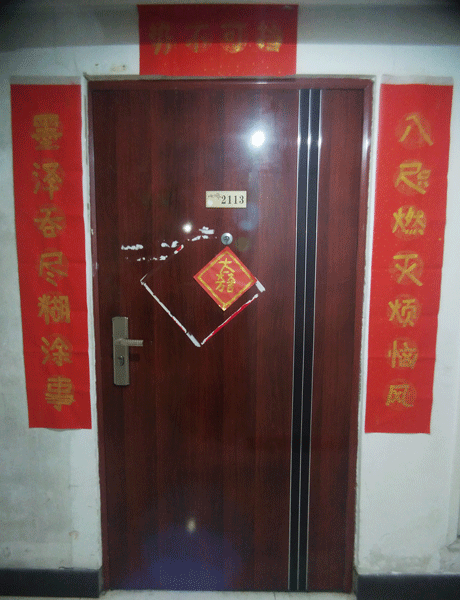
The horizontal scroll read “Unstoppable.” That was my wish for the new year. Looking back now, it feels more like foreshadowing.
January 24 — Harbin
My feelings about Harbin have always been complicated.
My first train ride in life was to Harbin. The first time I ever left my hometown, I was also heading to Harbin. I spent three years there, and when I left, I swore I would never come back.
I did return twice after that for work.
And now here I was again.
Everything felt familiar, and at the same time completely strange. When I left, Harbin had only just opened Metro Line 1, and I’d only ridden it once. Now there are three lines, and you can take the subway all the way to my old university campus.
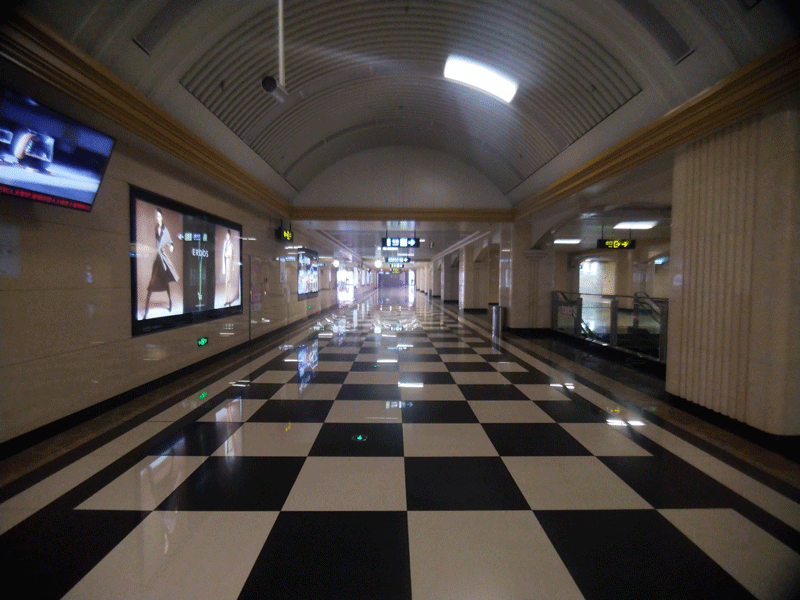
Honestly, I still have transit cards from Shenyang, Dalian, Shanghai, Beijing, and Tianjin. But Harbin’s metro stations may genuinely be the prettiest of them all. The stations are glossy, reflective, and each one seems to have its own carefully designed look.
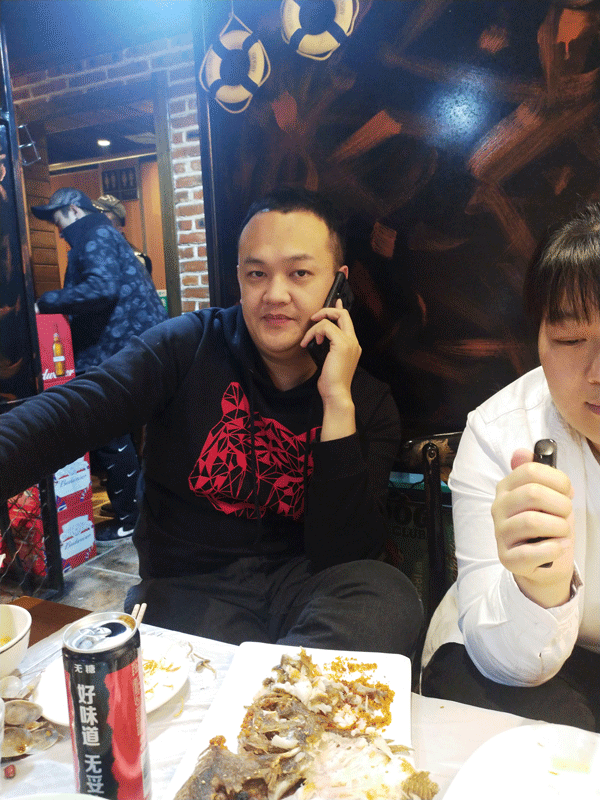
That night I had dinner with one of my university classmates, the guy who used to sleep in the bunk above mine. In the most literal sense, he really was “the brother in the top bunk above me.”
Sometime last year, while I was recording a program, the host asked whether I liked high school or university life more. I said university. My college years were short, but they were also probably the years with the fewest worries.
What about you? If you had to choose, would you pick high school or university?
January 25 — Saint Sophia Cathedral and a Return to Central Street
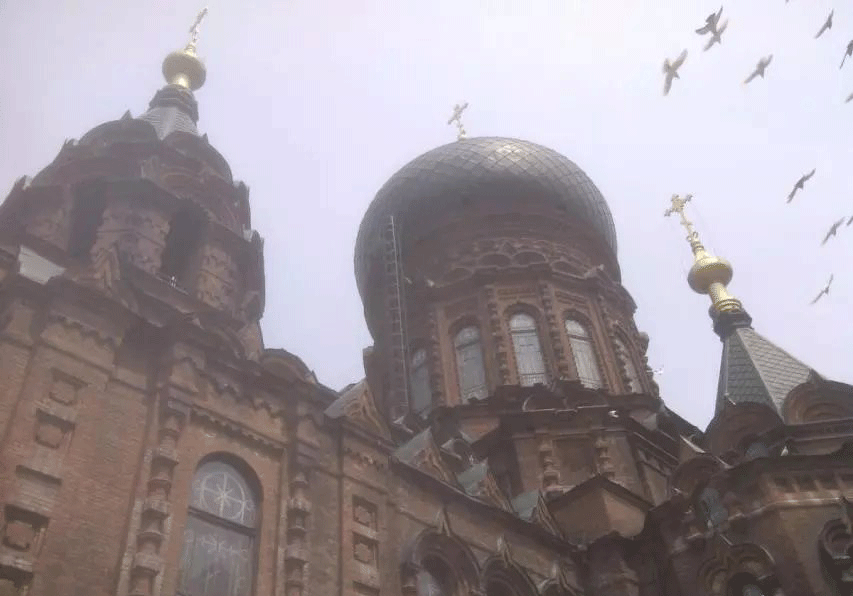
The last time I was here was after a job interview, on my way back. I didn’t treat it like a landmark then. I was just in a good mood because it was my first real attempt at finding work, and the interview had gone well.
This time I came almost on purpose, partly because it’s close to the station. If you’re heading to Mohe, Harbin is the unavoidable transfer point.
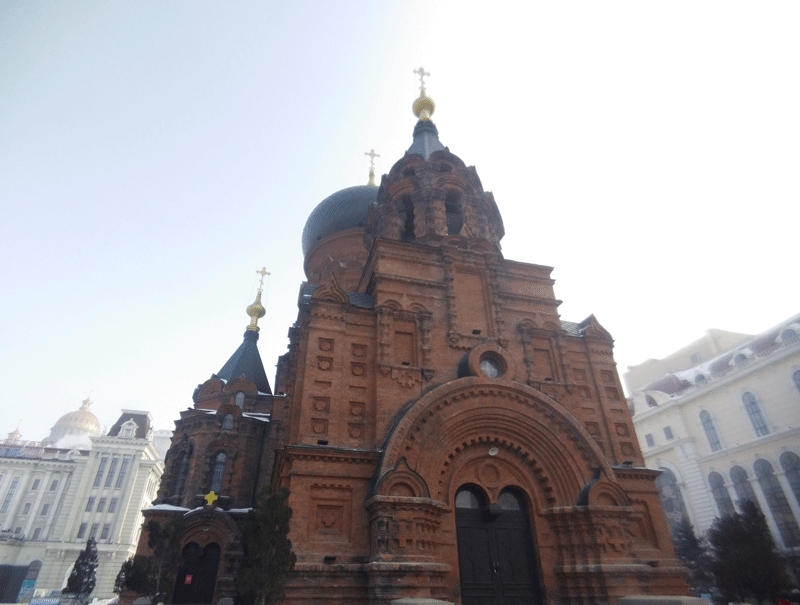
When I compared the new photos with old ones I’d taken years ago on a non-smartphone, the older shots somehow had better angles. My phone is much smarter now, but the results were worse. The weather definitely had something to do with that. It was so cold I could barely get my hands out, and my phone kept threatening to shut down.
Still, there was one unexpected reward. Just as I was about to leave, a Russian couple sat down on a bench to rest. I waved and made a photo-taking gesture. They happily agreed and smiled for the camera.
I have to admit, their smiles were incredibly infectious.
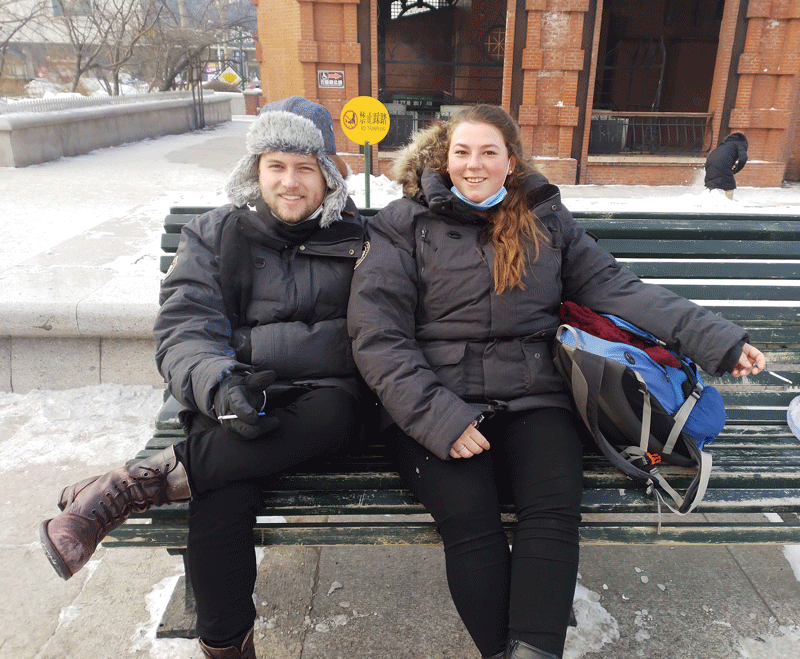
I doubt this was their first time being photographed in public. Maybe other people had asked for pictures with them too. On the square in front of Saint Sophia Cathedral, it couldn’t have felt more fitting.
I thanked them with my palms pressed together, and to my surprise, the man replied in a thick Northeastern accent: “No need to be polite.”
That really made me laugh.
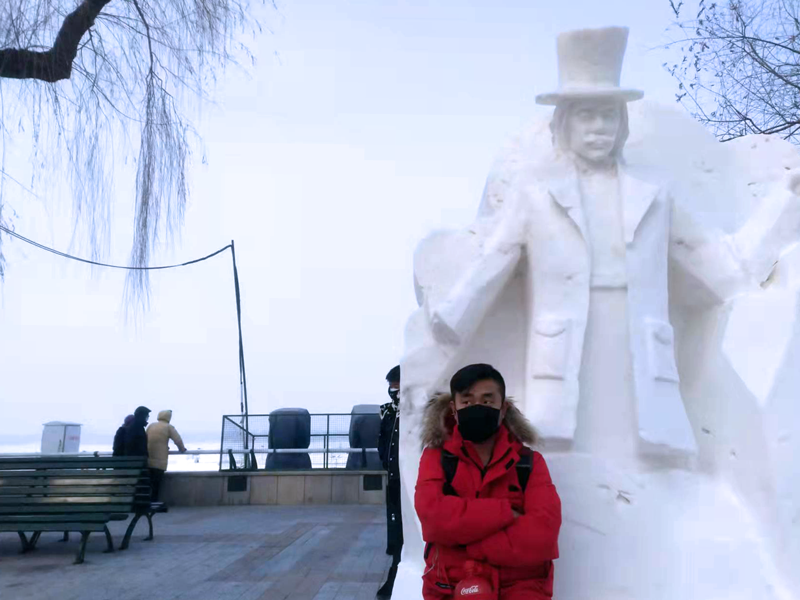
A short walk west from the cathedral square—at least I think it was west—takes you to Central Street. In winter the whole avenue is lined with ice sculptures and snow sculptures, with Russian-style music playing in the background. Surrounded by all those Russian-influenced buildings, you genuinely get a sense of that borderland atmosphere.
There were also many security staff on Central Street, and some of them very earnestly warned people not to buy things there. Maybe they really did want their city to do better. If tourists spend a lot of money on cheap merchandise and leave feeling ripped off, all they’ll remember is the resentment.
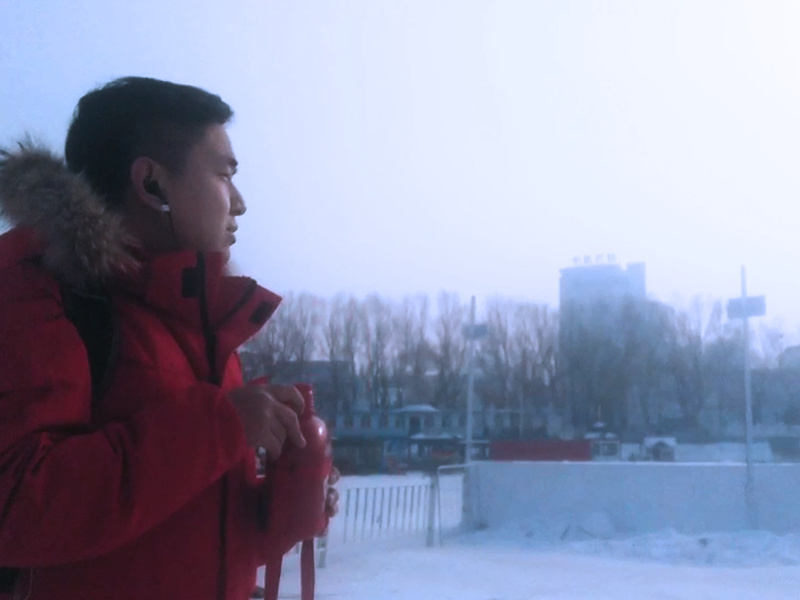
Even so, I still bought one thing: a Harbin limited-edition Coca-Cola item, a heat-resistant plastic bottle filled with hot ginger Coke.
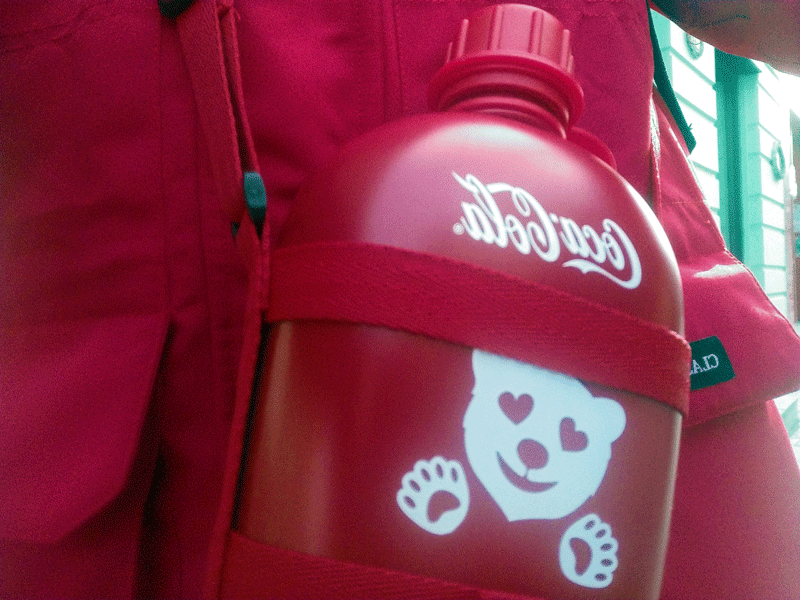
I liked the bottle a lot. It wasn’t insulated, but it matched my down jacket unusually well. Incidentally, this was the first time I’d worn a down jacket in more than ten years. I bought it specifically for this trip.
Walking all the way down Central Street toward the Flood Control Monument was a great way to ruin the mood. Every so often, someone would stop me—usually from a travel agency. If I said I was going to Mohe, they’d ask what there was to do there and try to convince me to refund my ticket and go somewhere they recommended instead.
Even when I was trying to film a moving shot, they wouldn’t stop. Even when I was speaking directly to the camera, trying to record a short clip, they would still interrupt.
And the nearest restroom to the Flood Control Monument was in an underground mall. To use it, you had to scan a code. A travel code wasn’t enough. If you were in a hurry, too bad.
I found all of that deeply off-putting.
You can probably guess why I wanted to leave this city back then.
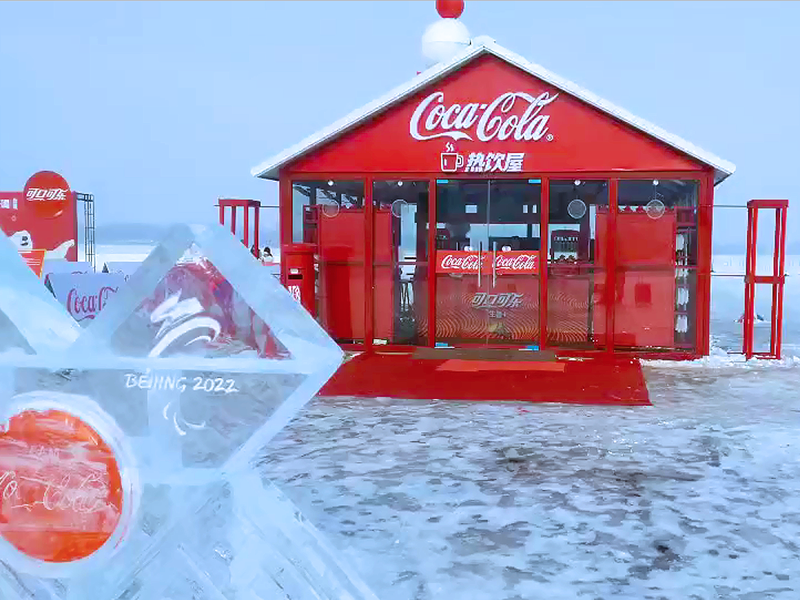
I spent three winters in Harbin, but I had never been to the Songhua River in winter. This was my first time, and I’d never really thought about the fact that the river surface would freeze solid.
Access to the ice was free, though you still had to place an order through an app. The whole area was basically a temporary amusement zone.
I’d only recently heard about it, but apparently this year a lot of places were setting up these seasonal “ice and snow carnivals.” The ice and snow are gifts from nature. The prices charged for some of the attractions, on the other hand, were hard to justify.
There was another odd little episode there. Just as I was about to leave, two reporters from Heilongjiang TV approached me. They asked whether it was my first time in Harbin, Heilongjiang, and wanted me to record a line saying:
“Heilongjiang is amazing. I hope my friends will come visit too!”
Thinking back on it now… well.
I was freezing, and before boarding the train to Mohe I wanted to eat something. So I went into the underground mall on Central Street and ordered barbecued pork rice.
I’ve eaten versions of that dish in both Shenyang and Wuhan. In Shenyang, it always felt undercooked somehow, with no side dishes to speak of—just two lettuce leaves tossed on top like an afterthought. In Wuhan, the side dishes often felt like the kind you get in a boxed meal, not especially fresh, and there was barely any meat.
Harbin’s version, though, has haunted me in the best way. Proper crisp roast meat, paired with several side dishes. If you just need something simple to eat, I can wholeheartedly recommend it.
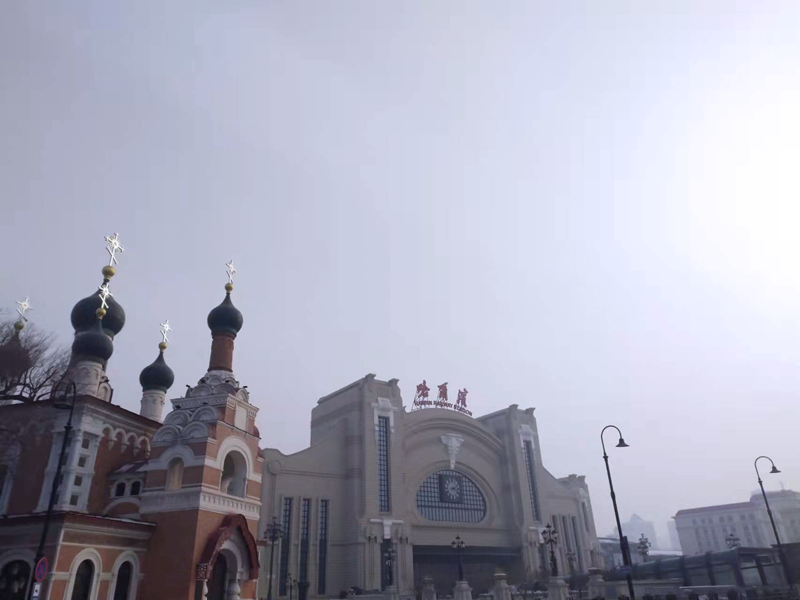
When I left Harbin years ago, the station was rumored to be under renovation. I remember the old station having several waiting halls depending on your direction of travel. There was even a KFC and an internet café inside.
This was my first time seeing it after the renovation. The internet café was gone—naturally, in the age of smartphones. The whole station no longer felt like an old train station at all. It had turned into one of those grand, polished, airport-style spaces that all somehow resemble each other.
Maybe there’s nothing wrong with that style. Maybe I’m just too nostalgic for what used to be there.
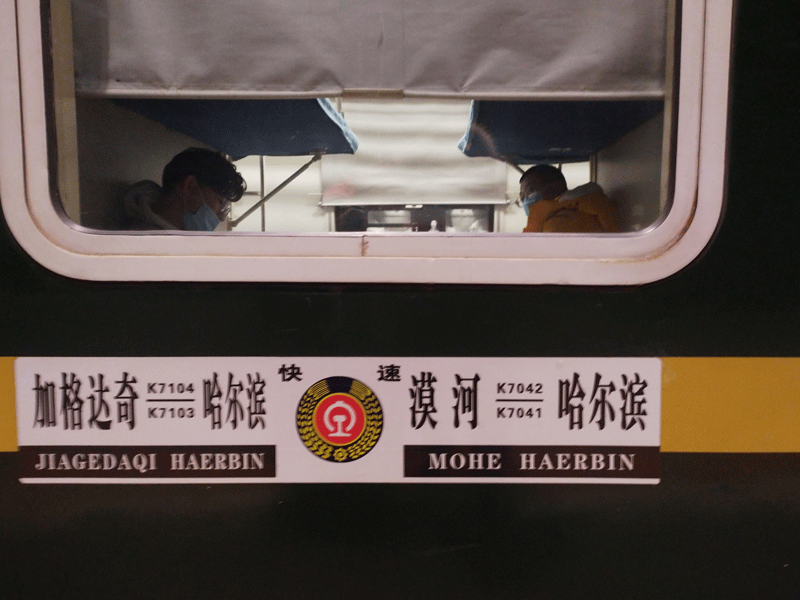
At dusk, I finally boarded the train to Mohe. There are only two trains heading there: one departing from Harbin and taking 17 hours, the other from Qiqihar and taking 24.
There’s supposedly an airport in Mohe, but it was being expanded and wasn’t operating. And in this season, even if it had been open, there was a good chance ice would have caused trouble anyway.
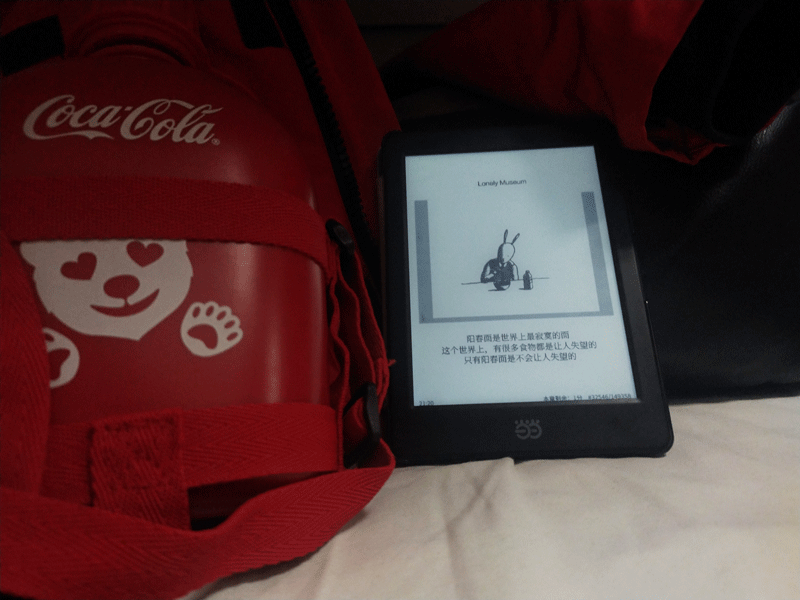
This was only my third sleeper-train trip. Because long journeys make battery anxiety worse, I usually bring a book with me. This time it was Museum of Loneliness. Every chapter seems to be about a life that has nothing to do with yours, and yet by the end of each one, you somehow feel that loneliness for yourself.
After four chapters, I gradually fell asleep to the rumble of the train.
January 26 — Mohe
At dawn, I woke up on my own.
Outside the window everything had become white, and ice had formed on the glass. In a sense it really was a snow-country train. But as someone from the Northeast, I couldn’t say the sight itself felt particularly novel.
What was noticeable was that by then, the carriage was almost entirely tourists. From the accents, most of them sounded like they were from Guangdong.
The bright morning sunlight flashed through the forests along the rail line. On a winter train this cold, a bowl of self-heating rice can honestly make you feel alive again.
By noon, the train pulled into Mohe Station.
Unfortunately, Mohe County happened to be conducting mass COVID testing that day, and we weren’t able to enter the urban area properly. Even if we had, there wasn’t much to do. So I went to find two new friends I’d met while forming a temporary group for the trip: Panghu, from Guangdong, and Ake, from Chengdu.
We chatted for more than two hours until the driver came to pick us up. Then we went together for an iron-pot stew, a classic Northeastern meal—though for me, of course, it was nothing new.
After taking in enough calories, I started doing something recklessly stupid.
The sun had only just gone down and there was still some residual warmth in the air, so the temperature was probably around minus 35°C.
So I took off my down jacket and fleece-lined shirt. Took off my gloves and hat too.
It was definitely a thrill.
By then it was already dark, so there weren’t many places left to visit. In town, there were basically only two options: Polaris Square and the Mohe Ballroom.
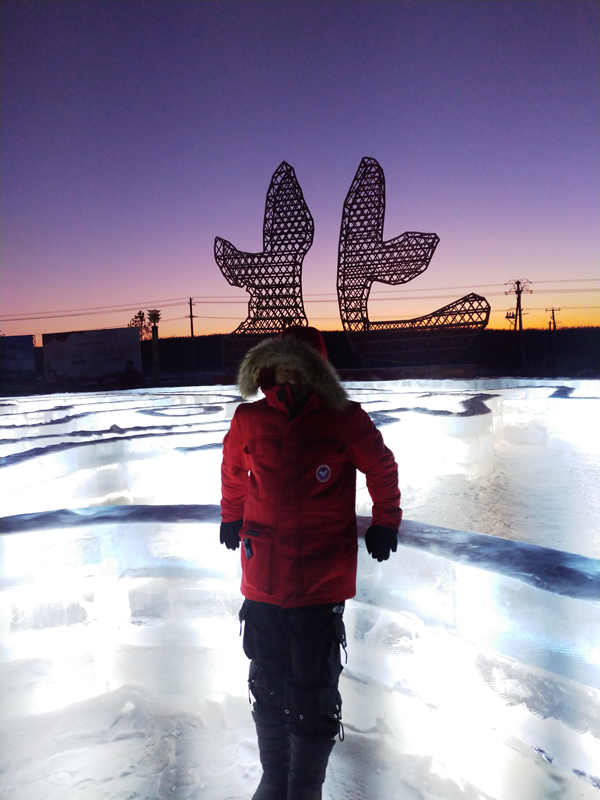
Polaris Square is, simply put, an ice lantern plaza. It wasn’t my first time seeing a place like that, but when I thought about it, the previous time I’d seen a proper ice lantern display must have been when I was four or five years old.
Maybe that winter really was colder, because back then even Jilin had ice lanterns, and if I remember correctly, the entire children’s park was full of them. Later, maybe global warming really did change things, or maybe it was because the park was demolished and turned into another square. Whatever the reason, after that I never saw an ice lantern park again.
After lingering at Polaris Square, we headed to the Mohe Ballroom.
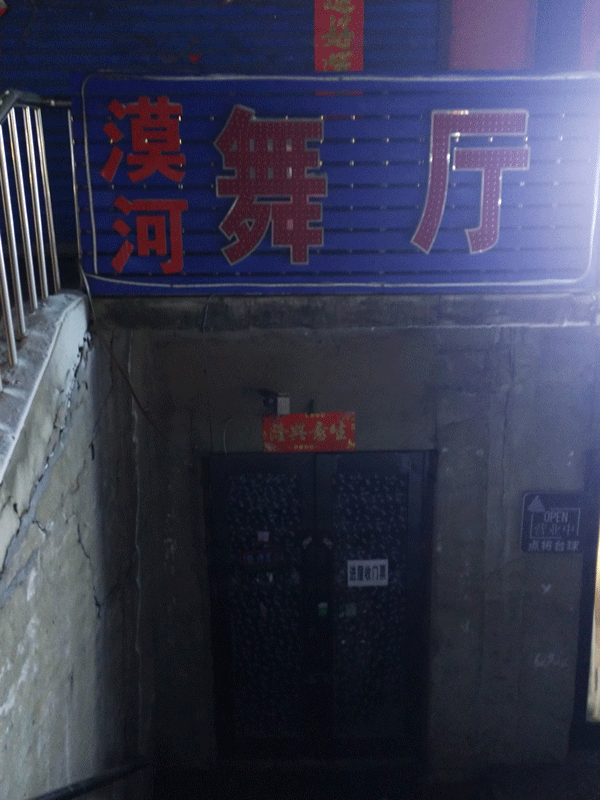
Yes, that Mohe Ballroom—the one from the song.
If you have time, come back and see me. See how the heavy snow has aged, how my eyes have melted. If you do see me, turn around first, and only then be surprised. I’m afraid my tears, my white hair, will look like a shameful joke.
When we arrived, the doors were locked. I couldn’t tell whether it hadn’t opened yet or whether business for the day was already over.
It was disappointing. I took a photo of the entrance and left.
To be honest, over the past year my ideas about love have changed.
For most of my life I felt that being alone was better—freer, simpler. But if you stay free for too long, loneliness starts to creep in. Not just loneliness, either. Sometimes regret.
Regret that youth has slipped away quietly, and I still haven’t experienced a love I could call unforgettable.
Anyway. That’s getting off track.
Most of Mohe’s scenic spots are in Beiji Village and Beihong Village. Because of the pandemic, Beihong Village was closed to visitors, so we headed to Beiji Village, about 80 kilometers away.
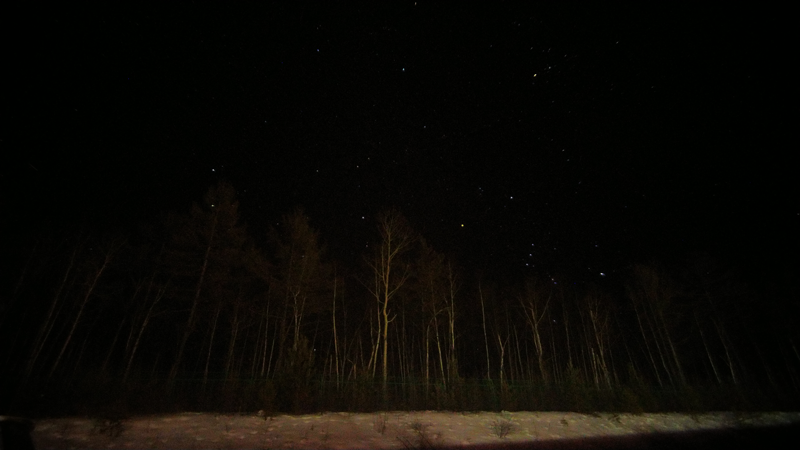
Around the halfway point, we passed through an area with no light pollution at all. There, for the first time in years, I saw a real sky crowded with stars.
Just like the ice lantern plaza, I couldn’t even remember how many years it had been since I’d last seen something like that.
Since I was there, I also noted down a simple way to photograph the night sky on an Android phone: switch to Pro mode, set ISO somewhere around 4000–4500, white balance above 4000, shutter speed at 1/30, and focus to infinity. If the result is still too dark, keep raising the ISO. If you want to find the Milky Way or certain constellations, there’s an Android app called Stellarium that helps with positioning.
And then the trip suddenly went downhill.
At the entrance to Beiji Village, they checked my information, didn’t ask too many questions, and let me through after I bought a ticket. But the hotel there refused to check me in.
They insisted that if I forced the issue, they would contact the epidemic control center or the local tourism office.
Every one of my health codes and travel codes was normal. I had negative nucleic acid test results both in Shenyang and in Mohe.
None of that mattered.
I had come from Shenyang, and that alone made me unacceptable.
The driver found someone else traveling in the same direction and had me sent back to the urban area. He also found me a hotel that would let me stay without checking identification.
I don’t really know what I was feeling at that point. Anger, certainly. A sense of grievance too. Something hard to name.
They told me it would be best if I left as soon as possible the next day. Otherwise, they said, they might consider quarantining me.
Every one of my health codes and travel codes was normal. I had negative nucleic acid test results both in Shenyang and in Mohe.
I didn’t even get to say goodbye to Panghu and Ake. They wouldn’t allow me to go back and collect my luggage myself.
By then I was miserable. My mood had sunk to the bottom.
After all that chaos, it was already 10:30 at night. I was exhausted, but I was also hungry.
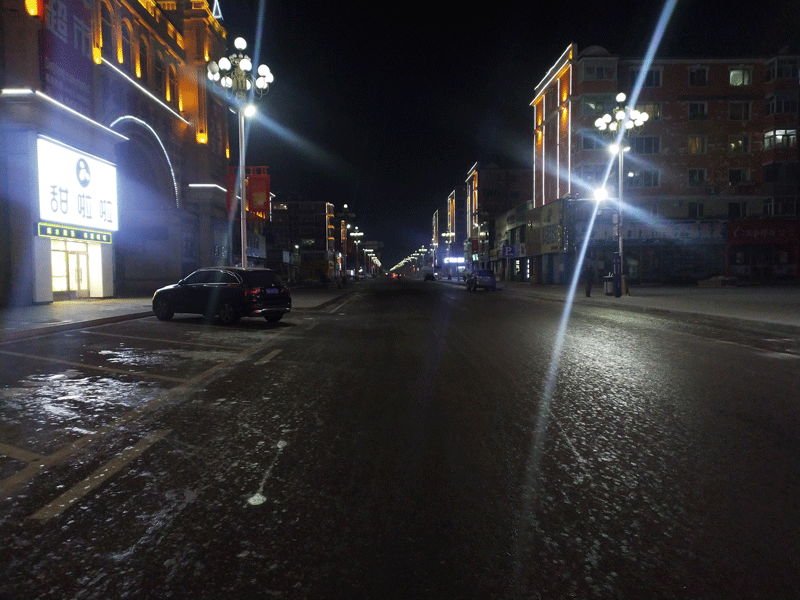
I walked through snowy streets looking for food. Luckily, I found a milk tea shop and a supermarket.
On my way back, I passed the Mohe Ballroom again.
This time it was open.
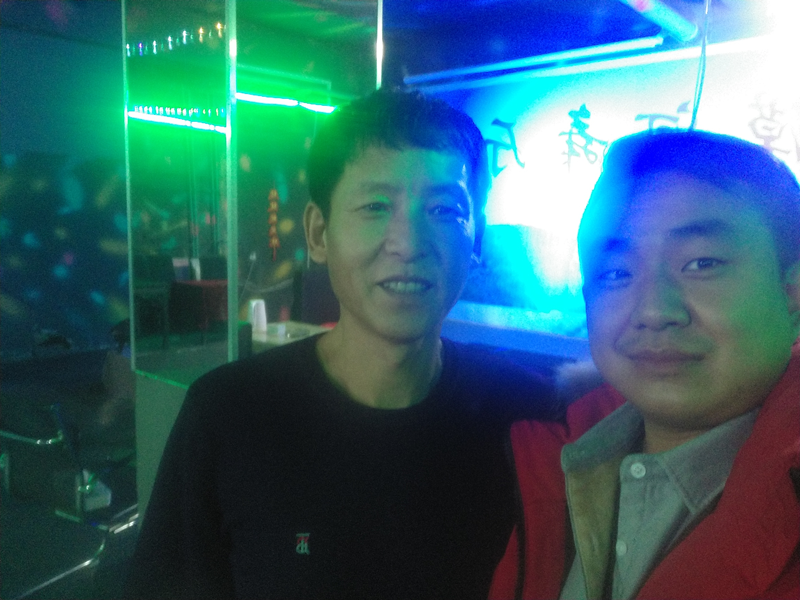
The door was half-closed, and I pushed it open. Inside, there was no one and the lights were off. I was about to leave when the owner turned all the lights on. I explained why I had come, and we took a photo together.
January 27 — Stranded on the Streets of Mohe
Maybe because I was so low, I didn’t try to get up until noon.
The places I had come to see were no longer options. My train was at four in the afternoon, so I decided to walk to the station. It would take about forty minutes.
Since I was leaving anyway, I thought I might as well film a set of departure shots. But now I had no travel companions. I checked my social feed and saw that Panghu and Ake were out doing the classic trick of tossing hot water into the air to make instant ice.
As for me, I could only set up my tripod, prop up my phone, walk away to film my own back, and then go retrieve the camera again.
At least the result turned out fairly well.
At the last intersection before the station, there was a bridge. Looking down from it, I imagined that in summer there would probably be a wide river below.
I hesitated for a moment, then climbed down a very steep slope into the riverbed.
I thought: the town and the tourist zone already treat me like a rat in the street.
But the wilderness never refuses a rat. The forest doesn’t ask for my travel code or nucleic acid report.
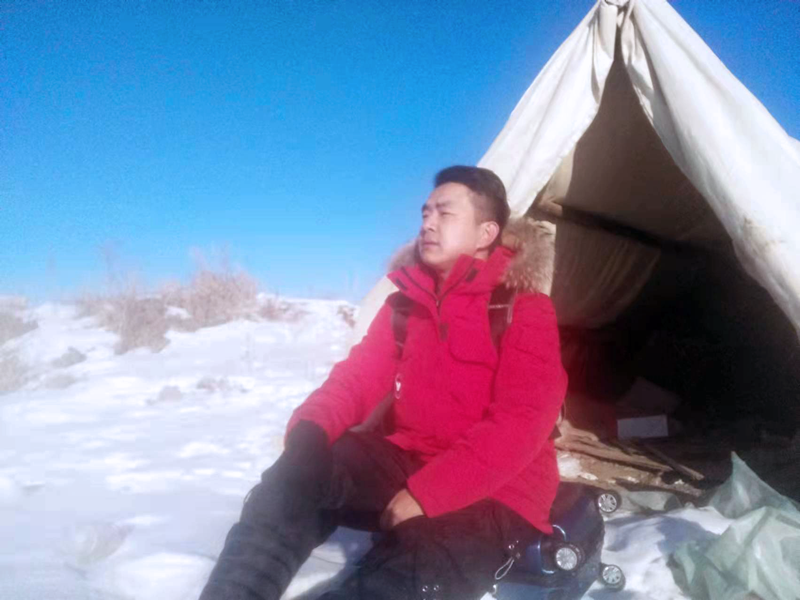
After crossing the frozen riverbed, I found an abandoned tent.
Maybe it had been left by some guy who came here ice fishing. Maybe by another unlucky traveler. Maybe by Ed.
If my train hadn’t been about to depart, I honestly might have been tempted to try a little wilderness survival right there.
No matter what, the trip was over.
From the train, I filmed the last stretch of sunset.
In the soft-sleeper compartment on the way back were two men heading home for the New Year. They seemed to work for some mining company in Mohe. The younger one was called Bing, and he called the older man “Fourth Uncle.”
Bing wasn’t very comfortable using the railway app and had bought the wrong ticket, so I helped him change it. After that, he invited me to have a drink with him and Fourth Uncle.
I had given up alcohol quite a while ago.
But I was frustrated, and they were warm and generous, so I drank with them anyway.
Bing was probably around thirty-five. He has a son who will take the high school entrance exam this year. According to him, the boy doesn’t really have hobbies—he just likes reading, and he’ll read anything.
I gave Bing the copy of A History of Japan that I had bought before departure. Partly because I already knew most of what was in it, and partly because I wanted to leave this whole awful experience behind.
Fourth Uncle is close to sixty. His son is two years older than I am. But the thing weighing on him wasn’t the same thing worrying Bing. You could tell he was trying hard to pressure his son.
Pressure him about what?
Marriage, of course.
January 28 — Harbin Station to Shenyang Station
After the train got back to Harbin and I said goodbye to Bing and Fourth Uncle, things turned stranger.
Once I had left Mohe, my nucleic acid test records disappeared.
Not just the Mohe result—my test result from Shengjing Hospital in Shenyang was gone too.
I truly didn’t know what expression I was supposed to make at that point.
At the transfer entrance in Harbin Station, a staff member asked me to show my test result. I could only call the epidemic control office in Mohe, and their answer was: take another test and leave the next day.
Fine. Great.
Then I tried explaining the situation to another staff member at the same entrance. Before I had even finished, he let me through.
So what exactly was the standard?
Did it depend on mood?
Let’s count what I had to show in Heilongjiang: my travel code, the local Heilongjiang health code, a venue code specific to the province, my latest nucleic acid report, my ID card, and a written declaration that even required a fingerprint.
I’m not sure whether that counts as excessive epidemic control. Things like this are difficult to judge aloud.
But when I returned to Shenyang, they only checked my travel code and that was the end of it. Of course my ID was also used, but only for passing through the station gate—which would have happened even without the pandemic.
I dragged my tired body back home.
Looking at the spring character couplet I had written and pasted on my own door, I unexpectedly thought of an old historical line about great fortune.
My cat had dug out an egg I hadn’t eaten. It had cracked, and by then it smelled rotten. After cleaning up the rotten egg, I remembered I had promised a friend something, so I recharged 75 yuan of Battle.net balance.
After all, aside from playing games, what else was I going to do?
Afterword
When I called that sunset on the train “the last afterglow,” I didn’t only mean the last light of this trip.
I meant that unless I have some unavoidable business there, I won’t be setting foot in Heilongjiang again.
Eight years ago, when I left Harbin, I swore I would never return. Even though I later passed through a couple of times for work and other reasons, I never came back with any real leisure or affection.
Part of me had wondered whether I should give the place another chance. That’s why I went. When I first got off the train in Harbin, I even thought a lot had changed for the better.
But after everything that followed, I couldn’t help feeling that there are reasons the Northeast has struggled to develop—and reasons Heilongjiang, the weakest-performing part of it, ended up where it did.
Originally, I had planned for 2022 to be the year I visited Fuyuan, Sansha, Kashgar, and Mohe—the four extreme points of China.
But the start went badly enough that I canceled the whole plan.
I have a habit of making a prediction at the beginning of each year, usually based on a word or phrase that rises from somewhere in my subconscious. For 2022, that phrase was:
“Live only after being driven to the edge.”
I just didn’t expect the year to begin this badly.
I had even joked to myself: if this is the North Pole of the trip, maybe being furthest north means it’ll be the least difficult.
What a thing to be wrong about.
Maybe I’ll edit the videos I shot along the way when I feel like it.
Or maybe I’ll delete them.
Who knows.
I just hope this “Travel Gone Wrong” series never gets a second entry.